
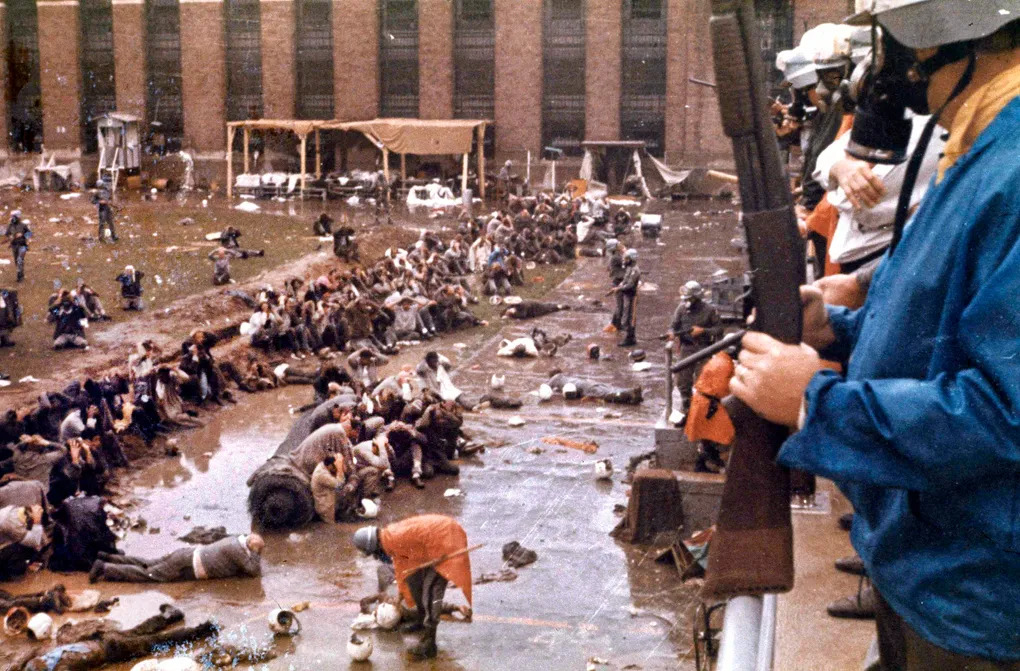
On September 13, 1971, New York State Police and correction officers forcibly retook Attica Correctional Facility after Governor Nelson Rockefeller authorized an assault that ended a four-day prison uprising in devastating fashion. More than 1,000 incarcerated people had seized control of part of the maximum-security prison on September 9, protesting overcrowding, racism, inadequate medical care, and other inhumane living conditions.
After days of tense negotiations over demands that included prisoner safety, medical care, improved conditions, and amnesty from retaliation, state authorities issued an ultimatum. When the prisoners did not surrender or release the hostages, helicopters dropped tear gas into D Yard and the assault force opened fire. New York State Archives records describe a near-indiscriminate barrage of almost 2,000 rounds by state police and correction officers.
The retaking of the prison killed 29 incarcerated people and 10 hostages. In all, 43 people died during the Attica uprising: four before the assault and 39 during the state’s recapture of the facility. The attack became one of the deadliest episodes in U.S. prison history and exposed profound failures in the nation’s correctional system.
In the immediate aftermath, state officials falsely suggested that prisoners had fatally cut hostages’ throats. Medical examinations quickly established that the hostages killed during the assault died from law-enforcement gunfire. The events at Attica prompted decades of litigation, investigations, prison-reform organizing, and continued debate over state violence, accountability, and prisoners’ rights.
Image: State police in riot gear retake control after the four-day Attica prison riot in New York, Sept. 1971, which left 43 dead.
