
On September 12, 1814, during the War of 1812, British forces advanced on Baltimore after landing at North Point, Maryland, the previous day. Fresh from burning Washington, D.C., roughly 5,000 British veterans sought to capture the city, a vital American commercial port and a major base for privateers attacking British shipping.
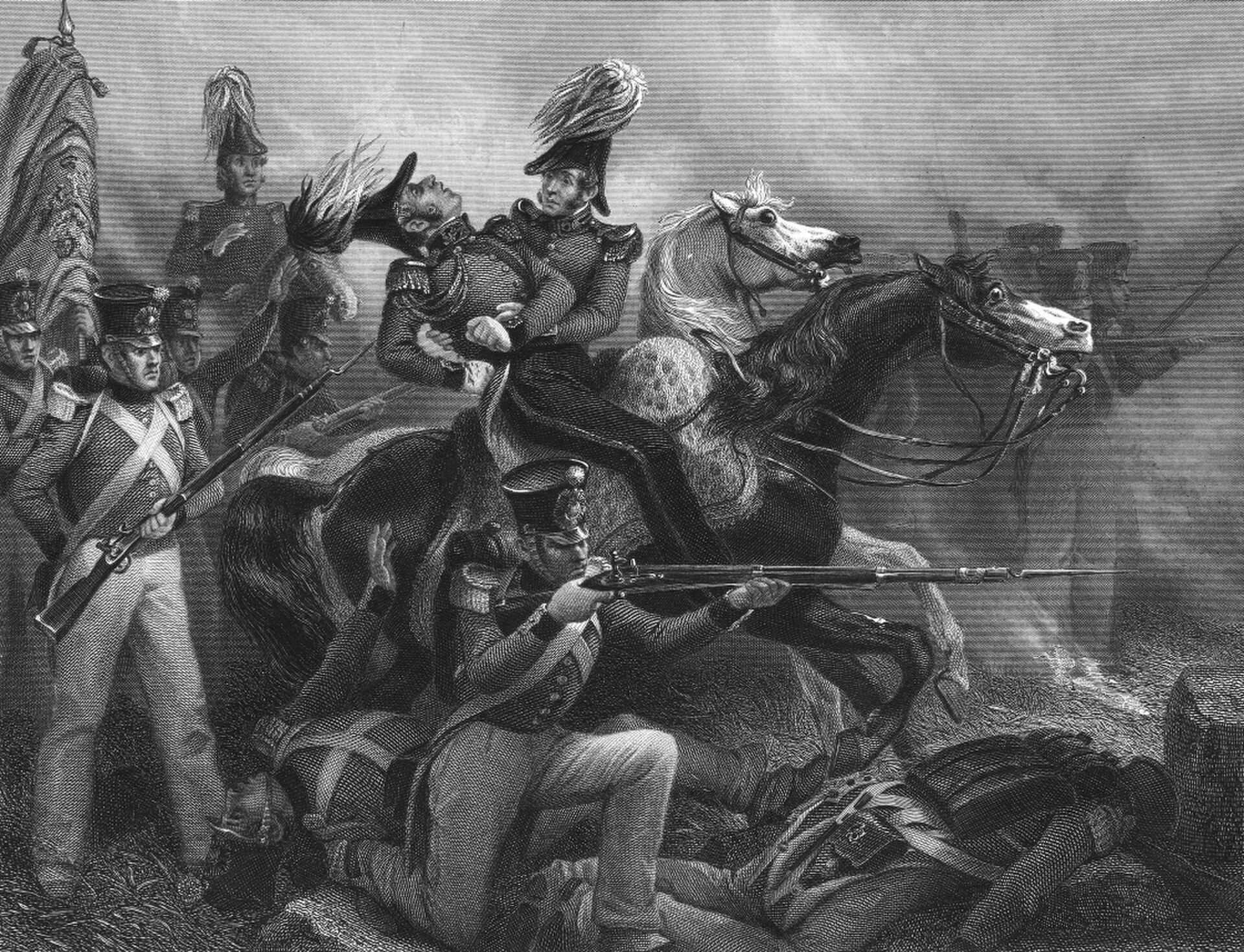
As the British moved toward Baltimore, American militia units engaged them near North Point. In the opening fighting, American sharpshooters mortally wounded the British commander, Major General Robert Ross. Although British troops pressed forward and forced the Americans back during the Battle of North Point, the resistance delayed their advance and gave Baltimore’s defenders valuable time to reinforce the city’s defenses.
The British operation ultimately failed when their naval bombardment could not force the surrender of Fort McHenry. The combined resistance at North Point and Fort McHenry persuaded the British to abandon the attack and withdraw. Baltimore’s successful defense became one of the most celebrated American victories of the war and inspired Francis Scott Key to write the poem that later became “The Star-Spangled Banner.”
Image: British Major General Robert Ross, on horseback, mortally wounded, on September 12, 1814 by Alonzo Chappel via Wikimedia Commons
