
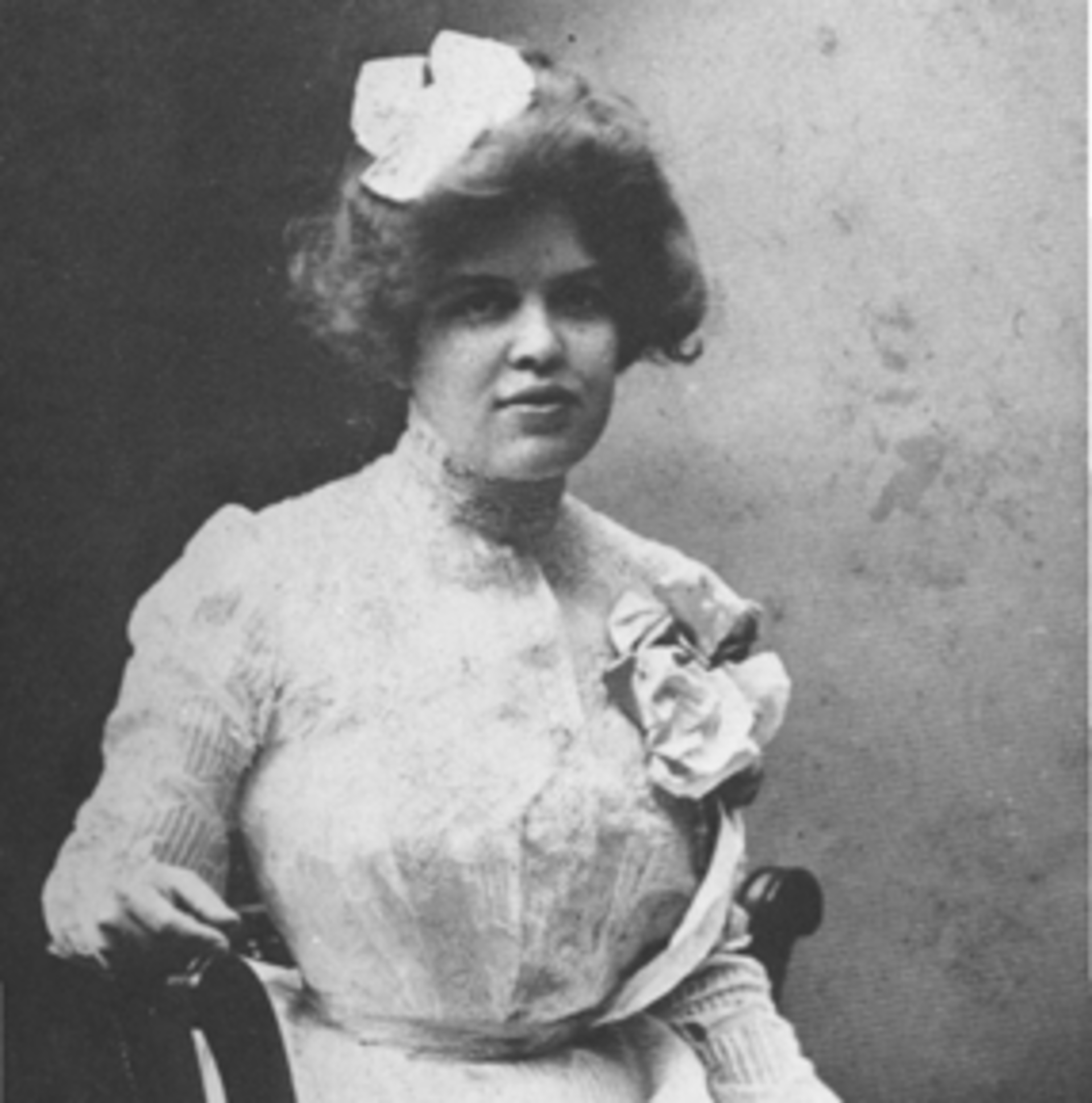
On September 9, 1878, the American poet, critic, teacher, and scholar of English meter Adelaide Crapsey was born in Brooklyn, New York. Raised in an intellectually engaged family, she graduated from Vassar College in 1901 and went on to teach while pursuing a rigorous study of poetic rhythm, stress, and lineation. That research would later appear, posthumously and unfinished, as A Study in English Metrics (1918).
Crapsey is best remembered as the inventor of the cinquain, a compact five-line form. Her original cinquains are unrhymed and organized by a pattern of one, two, three, four, and one stresses—not by the fixed syllable counts often associated with later classroom versions of the form. Influenced by the brevity and imagistic concentration of Japanese haiku and tanka, the cinquain gave Crapsey a precise vessel for poems of startling visual clarity and emotional compression.
Her work is often read through the knowledge of her illness: she suffered from tuberculosis, later identified in some accounts as tuberculous meningitis, and died in Rochester on October 8, 1914, at age thirty-six. Yet the poems do not merely document decline. In “Aubade,” morning light and shared laughter create a fragile, luminous reprieve; its invitation to “laugh, and love, and be merry” is moving not because it escapes mortality, but because it answers it.
Crapsey’s own selection of poems, Verse, appeared in 1915, shortly after her death, and introduced many readers to the cinquain. Her concise lyrics, close attention to sound and stress, and vivid natural imagery aligned her with early modernist and Imagist sensibilities, even as her work remained distinctly her own.
Image via Wikimedia Commons; public domain.
