
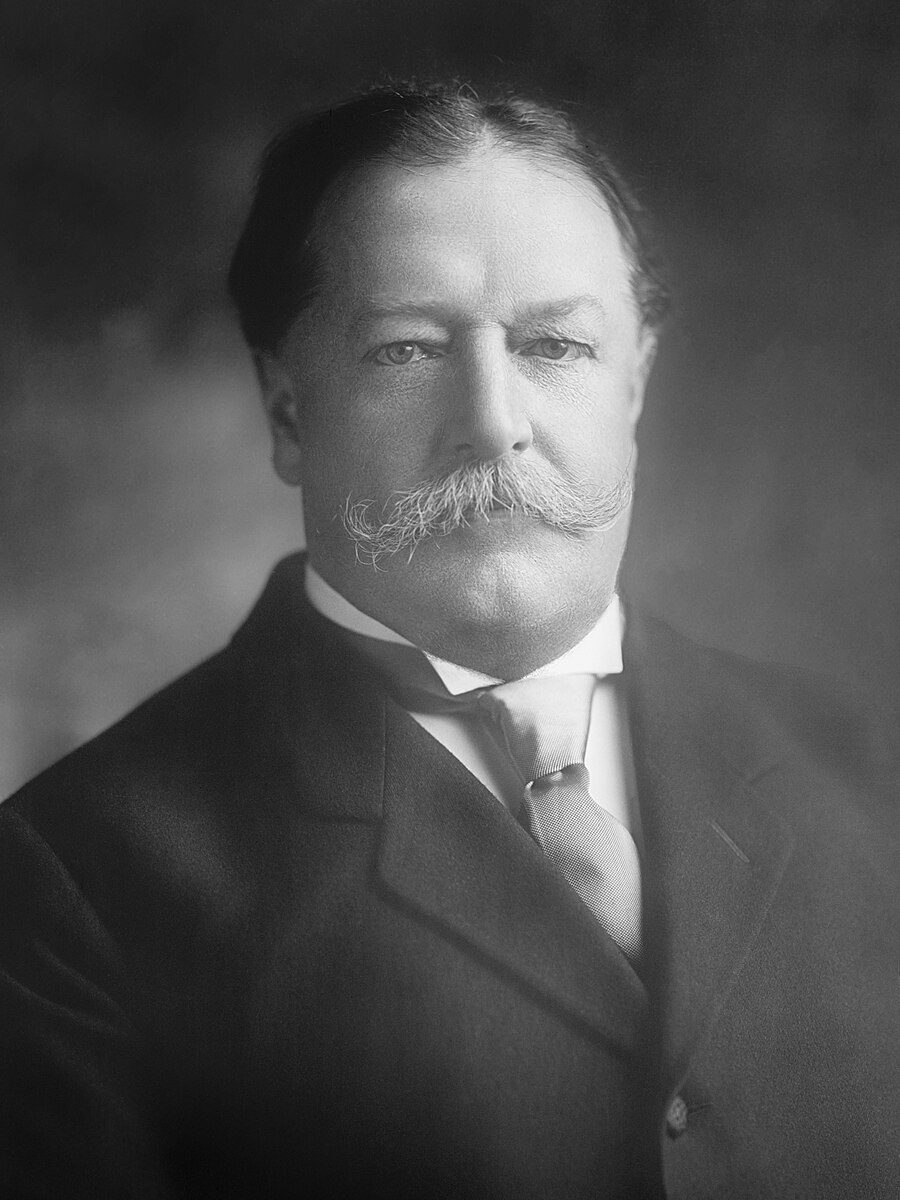
On September 3, 1913, former President William Howard Taft was elected president of the American Bar Association. The role did not mark Taft’s entry into the legal profession—he had been a lawyer, state judge, U.S. solicitor general, and federal appellate judge long before his presidency—but it marked his return to the legal world after his 1912 reelection defeat and the end of his White House term in March 1913.
Taft began teaching constitutional law at Yale in 1913 while also assuming the ABA presidency, a position he held from 1913 to 1914. From that prominent platform, he advocated reforms intended to make the federal judiciary and legal procedure more effective. The office placed him at the center of national legal debate during the Progressive Era and reinforced the professional identity he had maintained throughout a career that often moved between law, judging, administration, and politics.
The ABA presidency also belongs in the longer story of Taft’s unusually persistent ambition to serve on the Supreme Court. In 1921, President Warren G. Harding nominated him as Chief Justice of the United States, and the Senate confirmed him that same day. Taft remains the only person to have served both as president of the United States and as Chief Justice—a distinction that made him head of the executive branch first and, later, leader of the federal judiciary.
The key framing, then, is not that Taft “returned to his true professional passion” after discovering law anew. Rather, he was a veteran legal figure whose ABA leadership helped bridge his presidency and the judicial office he had long wanted most.
Image: William Howard Taft via Wikimedia Commons, public domain
