
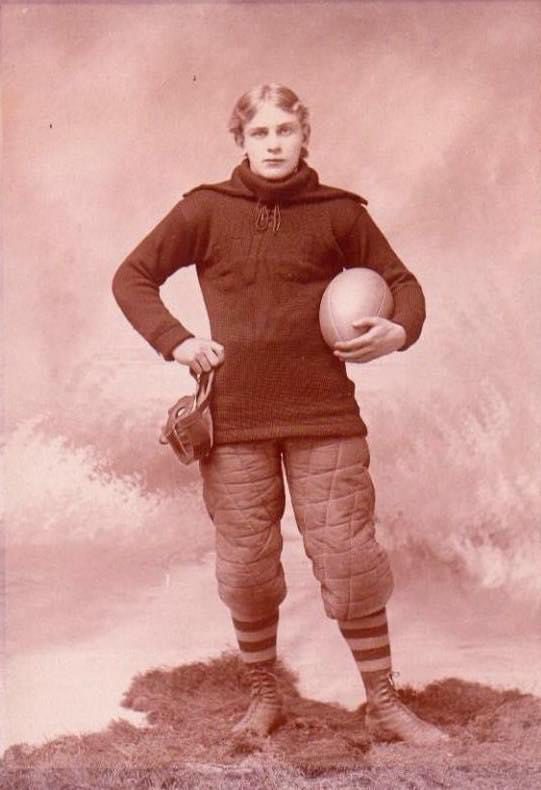
On September 3, 1895, football history took a small but consequential turn in Latrobe, Pennsylvania. Dave Berry, manager of Latrobe’s football team, paid 16-year-old quarterback John “Sal” Brallier $10 plus expenses to play against the Jeannette Athletic Club. Brallier helped Latrobe win 12–0, kicking two field goals in the victory.
The payment made Brallier the first football player to openly accept compensation for playing—a landmark in the transition from amateur football to the professional game. That distinction matters: Brallier was long regarded as the first professional football player, but records discovered decades later established that William “Pudge” Heffelfinger had received $500 from the Allegheny Athletic Association for a game in 1892. Brallier’s significance is that he became the first player publicly associated with being paid to play.
At the time, football was deeply shaped by amateur ideals. Paid participation could jeopardize a player’s standing in college athletics, and Brallier initially had reason to be cautious: he expected to attend Washington & Jefferson College soon afterward. Berry first offered expenses, then made the offer more direct—$10 plus expenses and the prospect of additional games. Brallier accepted.
Ten dollars was not enough to create professional football by itself. But the transaction became an enduring symbol of a larger change already under way in western Pennsylvania, where athletic clubs increasingly competed for talented players. From that modest payment grew a story that would eventually lead to the organized, commercial sport Americans recognize today.
Image: Quarterback John Brallier in 1895, via Wikimedia Commons (public domain)
