
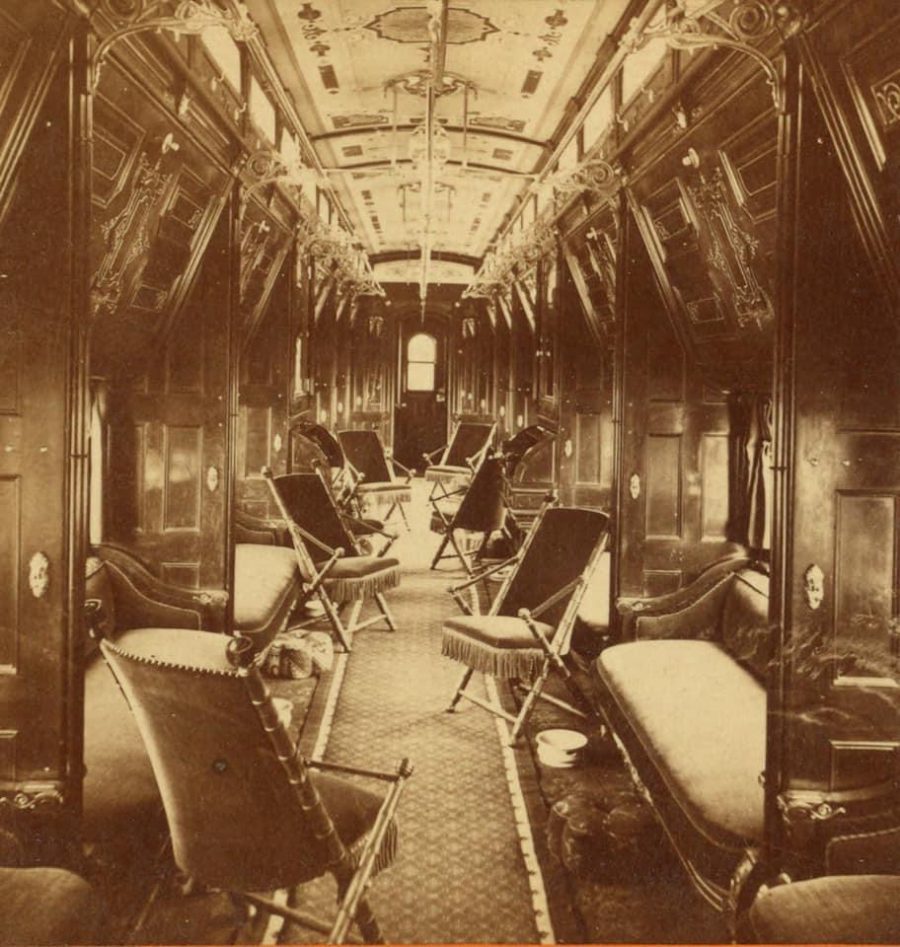
On September 1, 1859, George Pullman’s early sleeping car made an inaugural run between Bloomington, Illinois, and Chicago. Sleeping cars existed before Pullman, but his designs helped establish a new standard of comfort and presentation for long‑distance railroad passengers.
Pullman’s cars offered travelers a more civilized alternative to sitting upright through the night. Berths folded away during the day, while upholstered interiors, curtains, and attentive service introduced a level of refinement that would later define the Pullman name.
His earliest cars also faced a major obstacle: their larger dimensions did not always fit existing railroad clearances. Station platforms, bridges, and trackside structures frequently had to be modified before his designs could be used widely. Only after the Civil War did Pullman’s business expand enough for railroads to adapt their infrastructure to accommodate his cars.
