
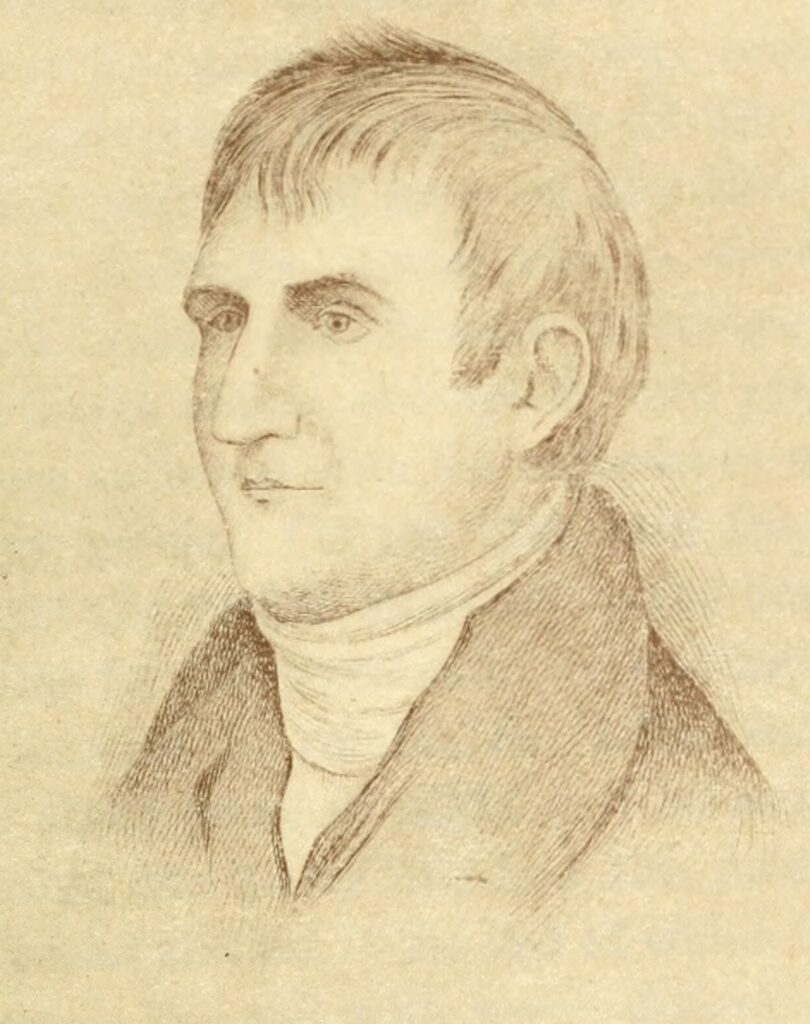
On August 31, 1803, Meriwether Lewis departed Pittsburgh on the Ohio River in the specially built boat intended for the expedition he would lead westward under President Thomas Jefferson’s authority. Lewis had arrived in Pittsburgh six weeks earlier to await the completion of the craft, organize stores, recruit men, and prepare for the long movement toward the Mississippi and Missouri rivers.
The departure came after a difficult delay. A severe summer drought had lowered the Ohio River, raising doubts about whether the heavily laden vessel could clear shallow water and obstacles. To reduce the load, Lewis acquired smaller boats and sent some supplies overland to Wheeling, farther downstream. He set out with a small party—seven soldiers, a pilot, and several civilian recruits—to bring the vessels and equipment toward the rendezvous with William Clark.
Pittsburgh was not yet the fully organized Corps of Discovery’s final departure point; Clark would join Lewis later, and the expedition’s westward push up the Missouri began after the party assembled near the Mississippi. But Lewis’s late-August departure was an essential opening stage of the enterprise: the practical beginning of a journey that combined diplomacy, science, military reconnaissance, and United States expansion into the recently acquired Louisiana Territory.
