
On August 30, 1836, real-estate entrepreneurs John Kirby Allen and his older brother, Augustus Chapman Allen, founded Houston, Texas. Only months after the Texas Revolution, the brothers acquired 6,642 acres near the junction of Buffalo and White Oak bayous and wagered that the site could become a commercial center for the new Republic of Texas. They named the settlement for General Sam Houston, the hero of San Jacinto—a shrewd choice that tied their private land venture to the republic’s most prominent public figure.
The Allens launched their town with unusually forceful promotion. In newspaper advertisements, they presented Houston not as a rough new settlement but as the future “great interior commercial emporium of Texas,” asserting that its location would draw trade from the surrounding interior toward Galveston Bay. The pitch blended geographic optimism, land speculation, and an appeal for investment in lots and improvements.
Their most consequential maneuver came in the struggle for the republic’s seat of government. John Allen offered to construct a capitol building at the brothers’ expense and provide additional facilities for public officials at nominal rent. Congress accepted the proposal, and the government moved from Columbia to Houston in May 1837, giving the new town an immediate political and commercial advantage. Houston’s early growth did not follow automatically from the Allens’ predictions, and its emergence as a major port required decades of subsequent development. Still, their venture established an enduring premise: Buffalo Bayou could connect inland commerce to the Gulf. By pairing land acquisition with ambitious advertising, political patronage, and a strategic transportation vision, the Allen brothers helped set Houston on the path from speculative townsite to major American metropolis.
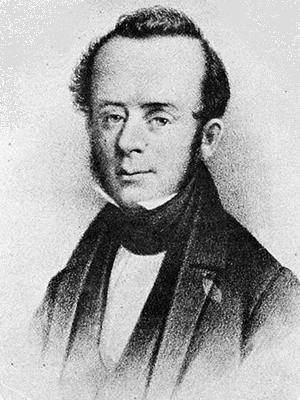
Image: An archival portrait print captures the sharp features of co-founder John Kirby Allen as he appeared during his mid-1830s business career, dressed in a high-collared waistcoat natural to the era. (Image via Wikimedia Commons, public domain).
