
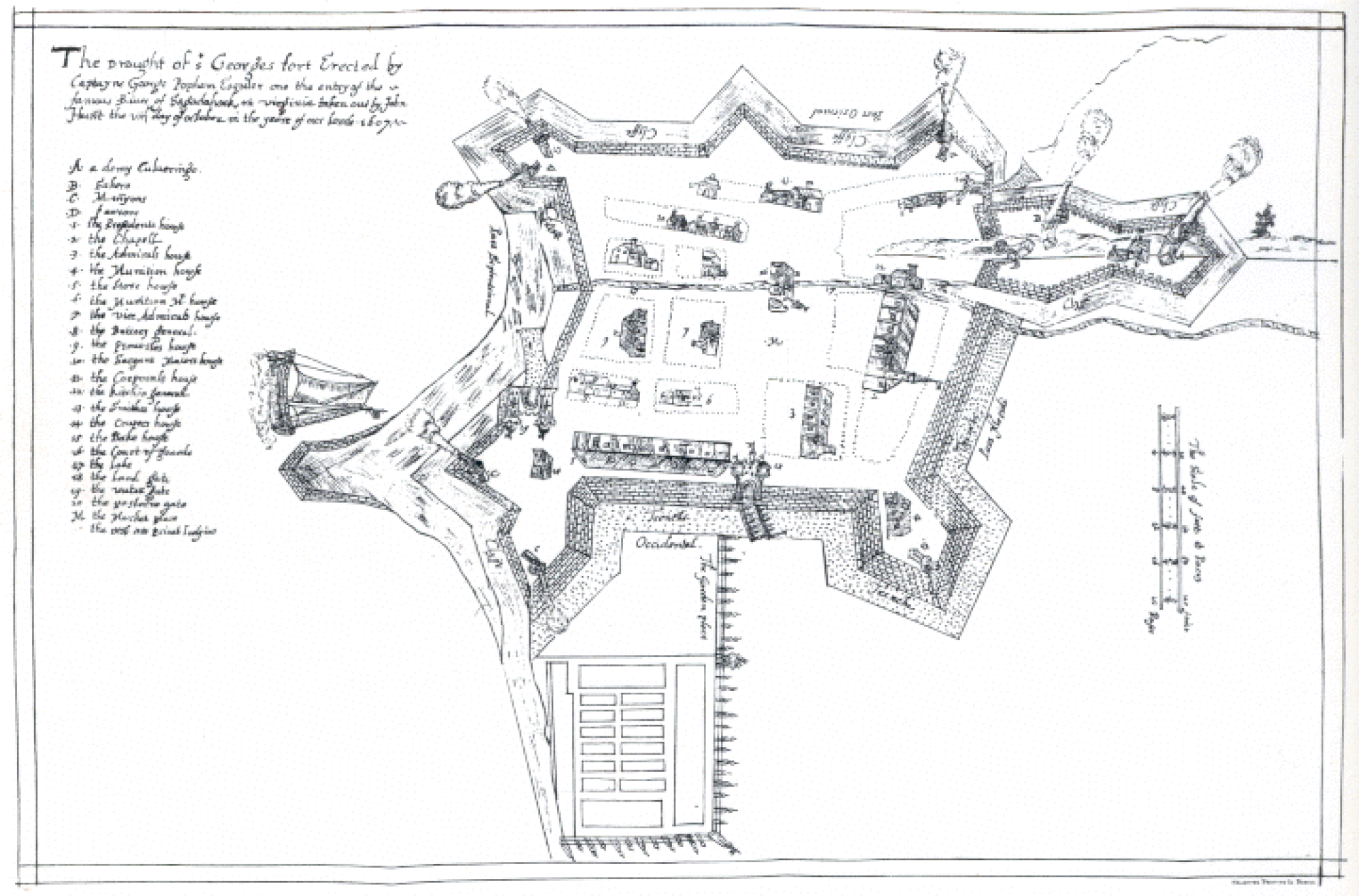
On August 29, 1607, English colonists aboard the Gift of God and Mary and John stepped ashore near the mouth of the Kennebec River in present‑day Maine to establish the Popham Colony. Landing thirteen years before the Pilgrims reached Plymouth Rock, this ambitious mercantile venture aimed to secure England’s legal and commercial foothold in northern New England while searching for precious metals and a possible route to the Pacific Ocean.
The settlers immediately began constructing Fort St. George, a fortified timber enclosure equipped with trenches and artillery to guard against European rivals and local Native nations. Their most remarkable achievement was the thirty‑ton pinnace Virginia of Sagadahoc — the first ocean‑going vessel ever built by English shipwrights on the North American continent, a feat of frontier engineering that demonstrated the colony’s technical sophistication.
Despite these early successes, the outpost soon faced severe hardship. A brutal winter destroyed storehouses and crippled food supplies, and news arrived that Sir John Popham, the colony’s principal financial patron, had died in England. With no profitable commodities, no stable leadership, and no realistic path to long‑term survival, the remaining colonists abandoned the settlement in 1608, boarding their hand‑built pinnace alongside arriving supply vessels and returning across the Atlantic.
Though brief, the Popham Colony remains a striking milestone in early English colonial history — a vivid demonstration of the extreme physical and logistical challenges of anchoring a permanent settlement in the northern wilderness, and a reminder that not all imperial ventures endured long enough to shape the continent’s future.
