
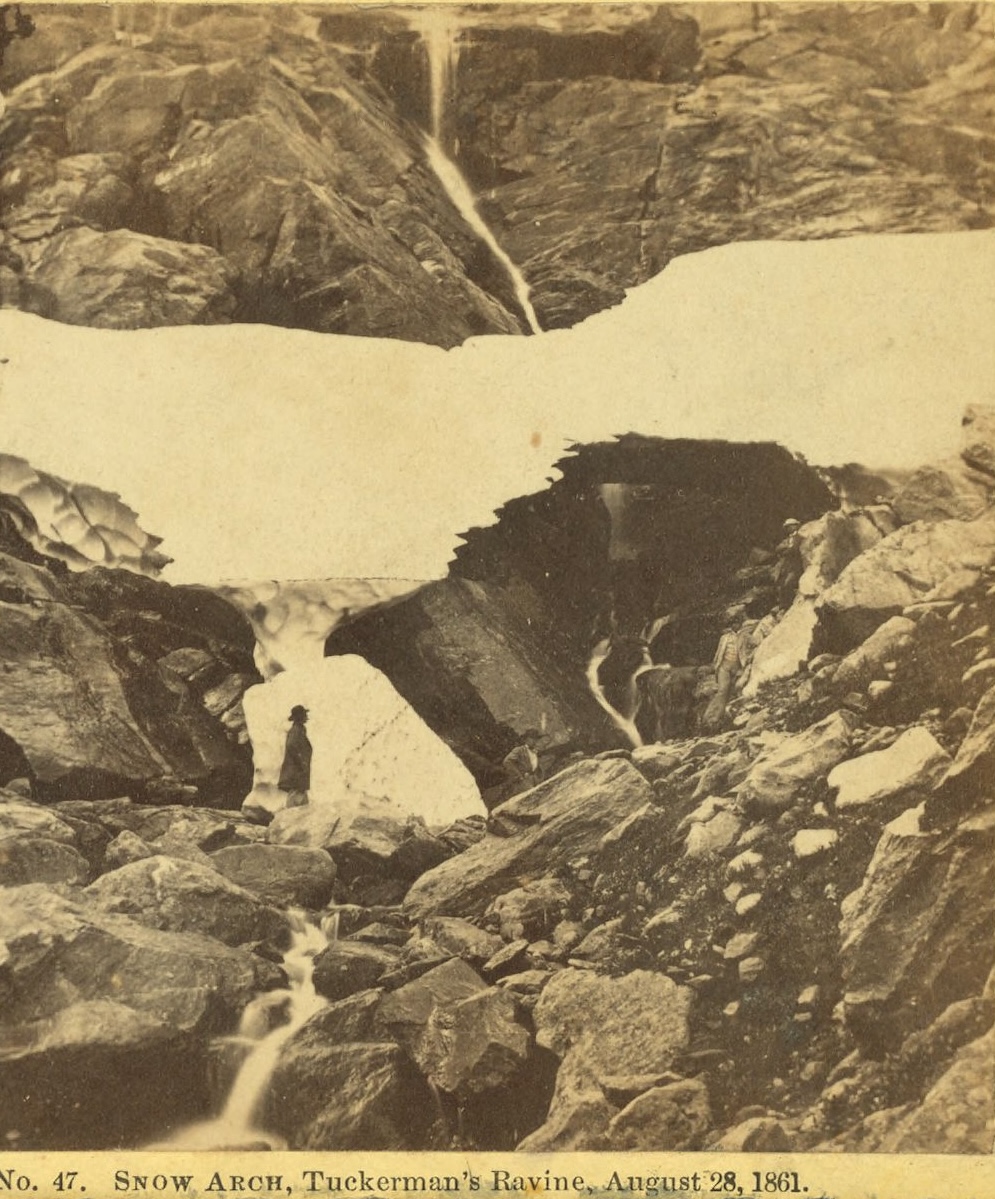
A historic photograph taken on August 28, 1861, records the melting Snow Arch within Tuckerman’s Ravine on Mount Washington, New Hampshire. The image served as a key piece of early environmental documentation during a period when the White Mountains were attracting intense interest from scientists and transcendentalist writers.
Formed by winter avalanches and sculpted by spring meltwater, the massive ice structure often survived deep into summer, creating a natural tunnel along the glacial cirque. Capturing it required the photographer to haul fragile glass-plate equipment up steep wilderness trails to document the ice before it dissolved.
The crisp print highlights the contrast between the arch’s white underbelly and the surrounding granite boulders. By transforming a seasonal phenomenon into a permanent visual record, the photograph provided geologists with valuable data on subalpine microclimates and erosion patterns. It remains a landmark example of early American landscape photography, where scientific curiosity and artistic focus converged.
Image: NYPL, public domain
