
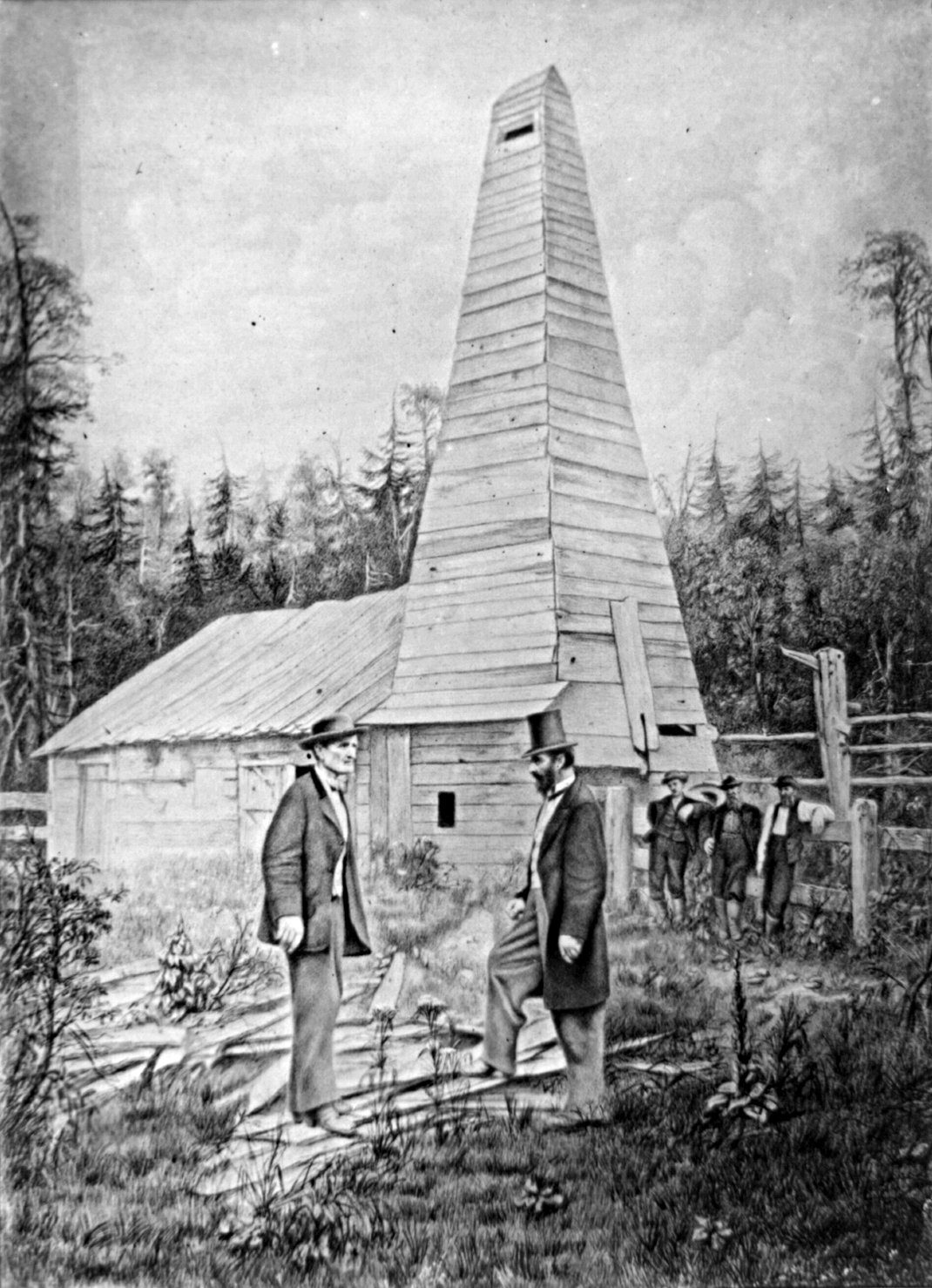
On August 27, 1859, the primitive drilling apparatus engineered by Edwin L. Drake officially struck a rich vein of crude oil at a depth of 69 feet near the banks of Oil Creek in Titusville, Pennsylvania. The historic breakthrough marked the very first successful commercial oil well in the United States, instantly transforming a quiet agricultural valley into the high-stakes birthplace of the modern petroleum industry.
The technical triumph achieved on August 27th was a magnificent feat of engineering persistence that single-handedly smashed previous resource limitations. Before Drake’s breakthrough, oil was gathered through tedious surface skimming or expensive whale-hunting expeditions, leaving the nation’s growing manufacturing sectors starved for affordable lighting and industrial lubricants. By deploying an innovative cast-iron pipe mechanism to prevent the surrounding loose earth from collapsing into the drill hole, Drake proved that petroleum could be systematically pumped directly out of subterranean bedrock in massive, highly lucrative quantities.
The sudden success of the Titusville well triggered a rapid, chaotic oil rush across western Pennsylvania, attracting thousands of speculators and providing a massive economic boon for retail transportation networks and manufacturing syndicates. This technological shift laid down the exact logistical and chemical infrastructure that would later fuel the rise of massive corporate monopolies and the global automotive era. The historic well remains a definitive standard of industrial modernization, recording the precise chemical pivot point that accelerated the velocity of American economic transactions into the twentieth century.
Image: A photograph details inventor Edwin L. Drake standing to the right of his historic timber derrick at the Titusville well site. (Image via Wikimedia Commons, public domain).
