
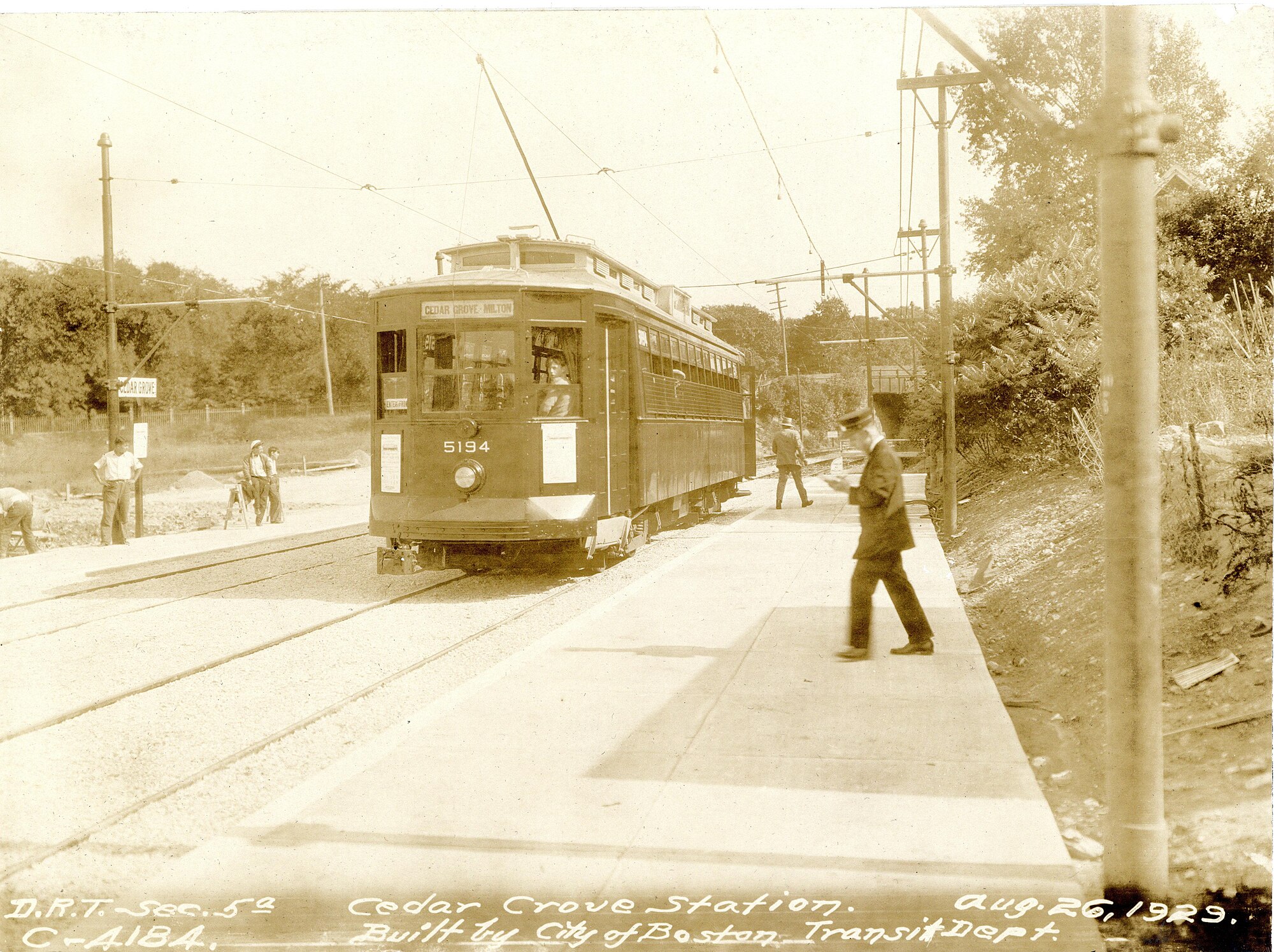
On August 26, 1929, the Boston Transit Department officially opened a new, high-speed electric rapid transit line stretching from Ashmont to Milton, with passenger cars smoothly rolling out from the Cedar Grove station to mark the inauguration.
The infrastructural deployment executed on August 26th served as a key piece of public urban planning strategy designed to connect the city’s expanding southern suburbs directly with the commercial center of downtown Boston. Prior to this 1929 breakthrough, regional commuters relied on slower, less frequent steam railroads, which restricted the growth of middle-class residential developments along the Neponset River corridor. The new electric line single-handedly accelerated the velocity of daily urban transit, establishing low-cost, uniform transit zones that allowed suburban families to travel for work or shopping in a fraction of the time.
The archival photograph of the outbound car at Cedar Grove captures a landscape catch mid-transformation, detail the clean integration of modern electric rail infrastructure into a rapidly growing metropolitan area. By replacing outdated transit links with high-efficiency urban transport, municipal planners successfully provided an invaluable boost to regional business transactions, laying down the exact structural blueprint for modern commuter networks. The launch remains a landmark study in mass transit innovation, showing how public utility investments could alter the daily layout of a major American city.
Image from Boston Transit Department via Wikimedia Commons, CC BY 2.0.
