
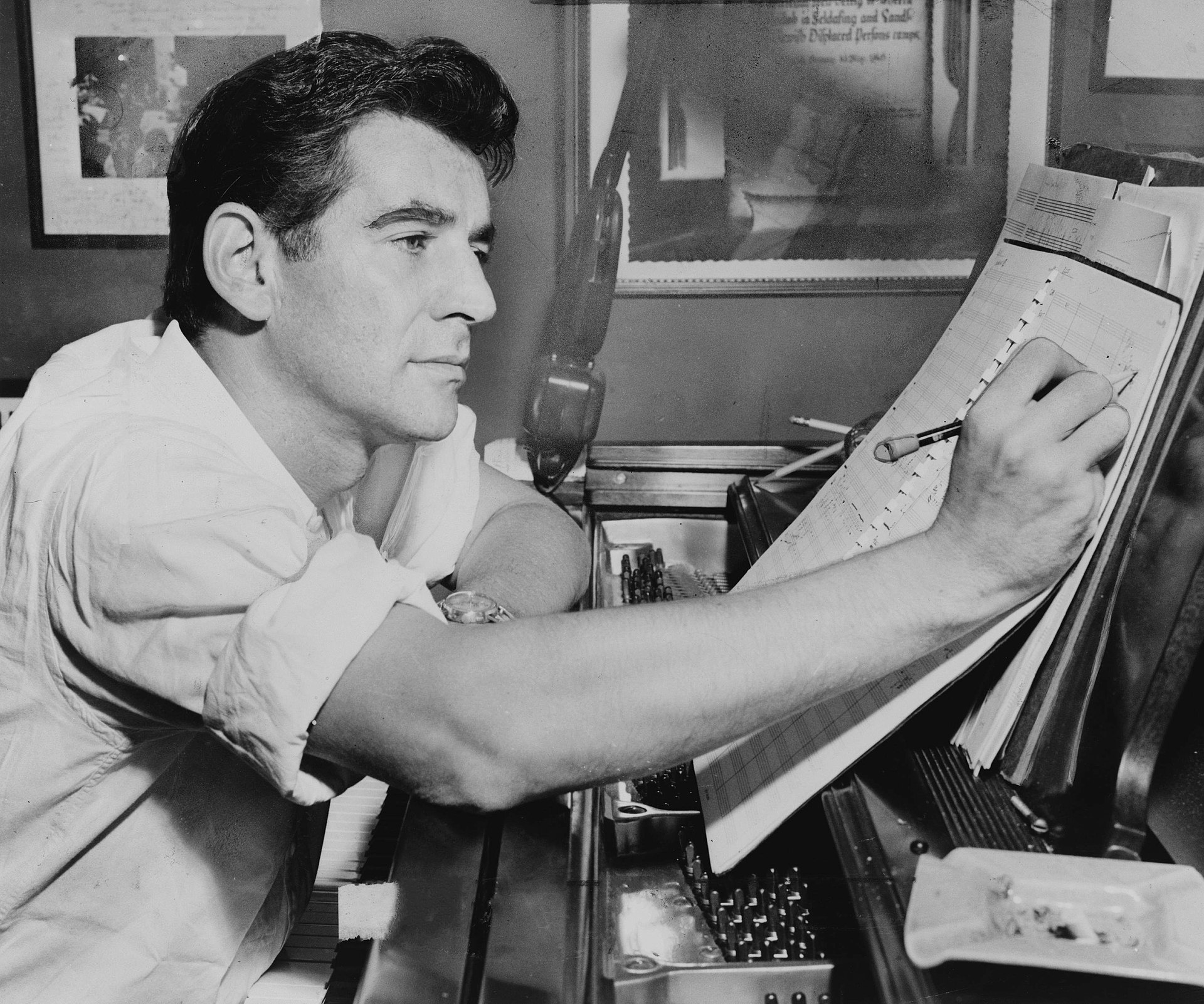
Leonard Bernstein was born on August 25, 1918, in Lawrence, Massachusetts. His sudden breakthrough came in 1943 when he stepped in completely unrehearsed to conduct a New York Philharmonic concert at Carnegie Hall, launching a legendary career that reshaped the trajectory of American music.
Bernstein’s arrival introduced a dynamic intellect whose intense energy and emotional depth broke the traditional mold of classical performance [wikipedia]. He composed boundary‑pushing works like West Side Story and Candide, masterfully blending symphonic tradition with the syncopated, driving rhythms of American jazz [wikipedia]. His unique ability to explain complex musical theory brought classical orchestration directly into millions of American living rooms through his celebrated, televised Young People’s Concerts.
Beyond his artistic achievements, Bernstein was a deeply committed advocate for civil rights and global peace, consistently using his massive cultural influence to support urgent humanitarian causes [wikipedia]. His work earned a staggering sixteen Grammys, two Tonys, and seven Emmys, leaving a legacy of creative brilliance and public engagement that proved music could unite diverse communities [wikipedia].
Image: Leonard Bernstein seated at a piano making annotations to a musical score in 1955 via LOC, no known restrictions.