
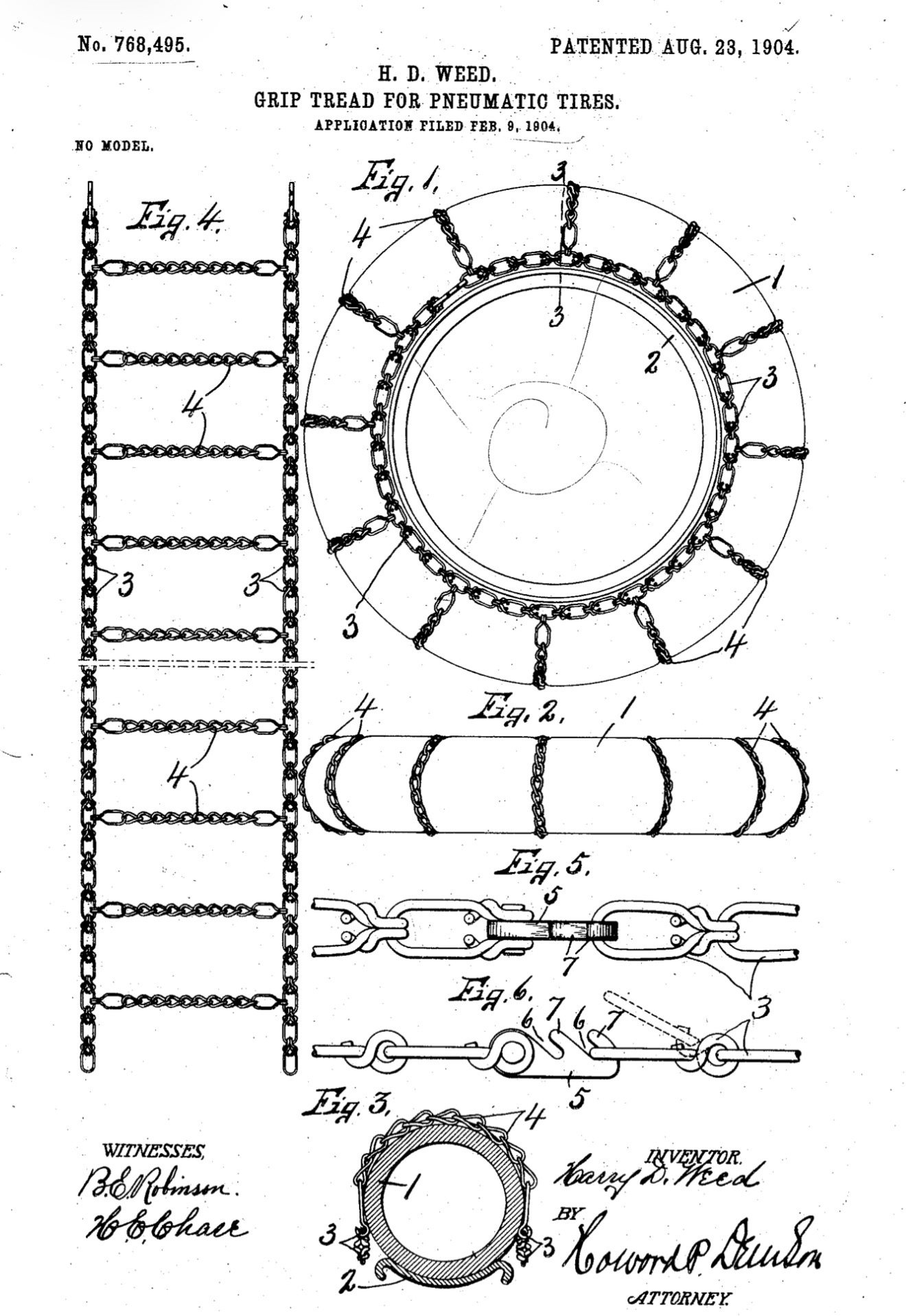
On August 23, 1904, inventor Harry D. Weed of Canastota, New York, received U.S. Patent No. 768,495 for his revolutionary “Grip Tread for Pneumatic Tires.” His mechanical layout introduced a flexible network of iron chains wrapped around vehicle wheels, single-handedly inventing the modern tire chain.
Weed’s historic patent on August 23rd was a brilliant engineering milestone that permanently transformed the structural parameters of public safety, rural transportation, and early automotive logistics. Prior to his 1904 breakthrough, the rapid expansion of the young American motor vehicle industry ran into a literal stone wall during the winter and spring months, as primitive, dirt-paved roads turned into slick quagmires of ice and mud. Early rubber tires possessed zero traction on these unpaved routes, causing heavy vehicles to dangerously skid out of control, which severely restricted commercial shipping and rural mail delivery to fair-weather seasons.
Weed engineered an intricate system of interconnected metal loops that sat loosely across the tread, allowing the weight of the moving automobile to continuously press the iron links into the soft ground to secure traction without destroying the rubber tire beneath. His pioneering non-skid invention single-handedly accelerated the velocity of commercial transactions, turning the automobile from a seasonal luxury toy into an all-weather necessity capable of navigating the deepest frontier winters.
Image via Wikimedia Commons, public domain
