
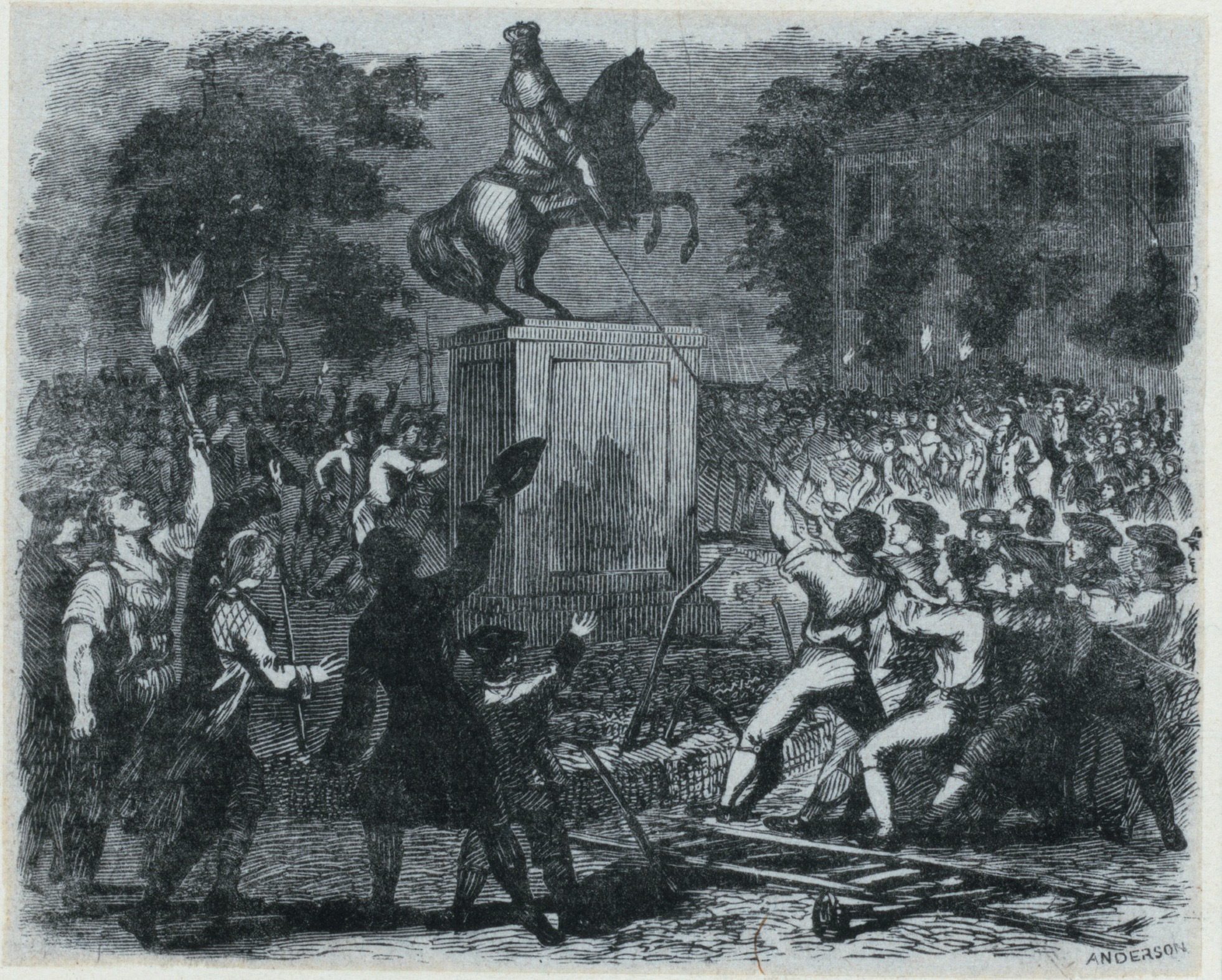
On August 22, 1775, England’s King George III declared the American colonies to be in open rebellion. George was stating the obvious after Lexington, Concord, Fort Ticonderoga, Bunker Hill, and the Continental Congress issuing a Call to Take Up Arms.
The high-stakes meeting of the King and his Privy Council on August 22nd established a critical legal boundary line that fundamentally redefined the nature of the American War for Independence. Officially titled the Proclamation for Suppressing Rebellion and Sedition, the document transformed colonial merchants, local assemblymen, and continental soldiers from disgruntled British subjects into active traitors against the Crown. By flatly dismissing the Continental Congress’s peaceful Olive Branch Petition before it could even be formally read, King George III slammed the door on any potential diplomatic compromise, setting up the official royal signature and public decree that followed the next day, August 23.
The proclamation provided the vital legal teeth required for the British Navy to aggressively implement an unyielding blockade around American ports. This economic stranglehold signaled to rival European empires like France and Spain that any ongoing trade with the colonies would be treated as an act of economic warfare. The document served as an essential catalyst that rapidly accelerated the radical shift toward separation, forcing a reluctant Continental Congress to abandon thoughts of reconciliation and map out the direct political path that would lead to the Declaration of Independence a year later.
Image via NYPL via Wikimedia Commons, public domain in the US.
