
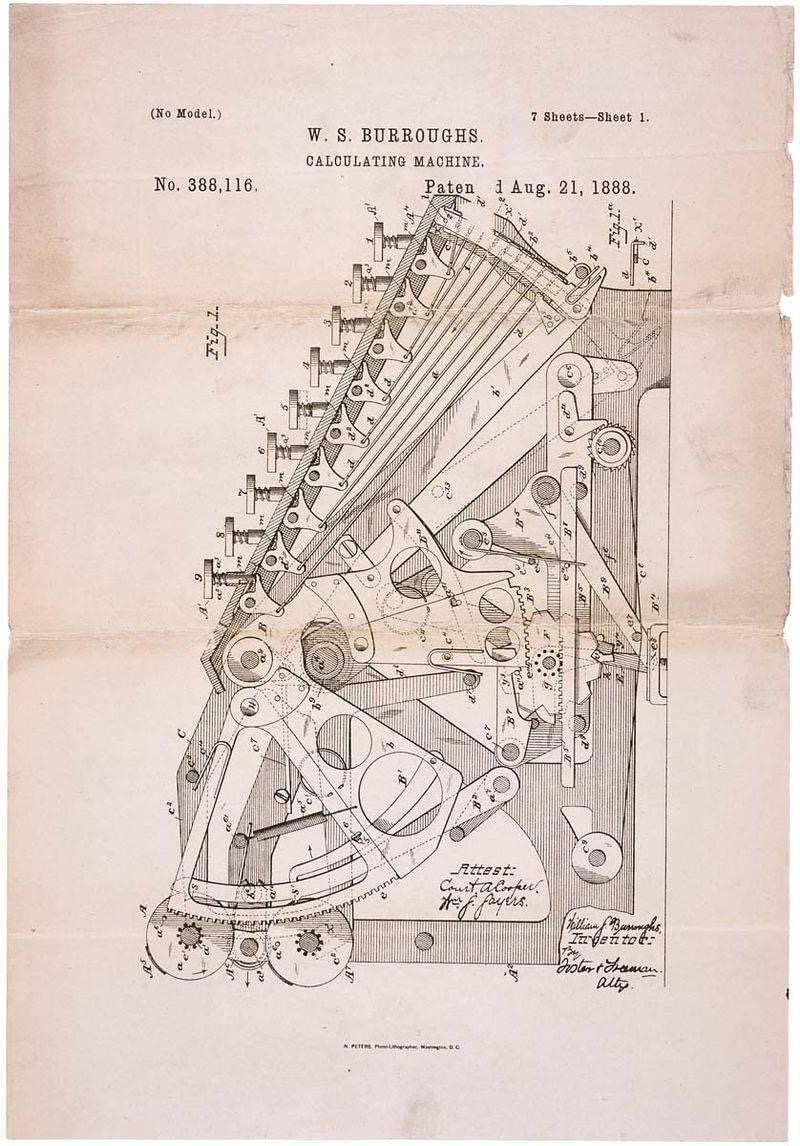
On August 21, 1888, inventor William Seward Burroughs received a patent for his pioneering “Calculating Machine,” the first successfully marketed adding and listing machine.
Burroughs’s patent fundamentally restructured the architecture of modern accounting. Before his breakthrough, financial institutions relied on manual pen‑and‑ink calculations vulnerable to human error.
His machine used an intricate system of gears, levers, and printing keys to calculate sums with precision and print results instantly for audit. The invention accelerated commercial transactions and laid the mechanical groundwork for the digital data‑processing revolution.
