
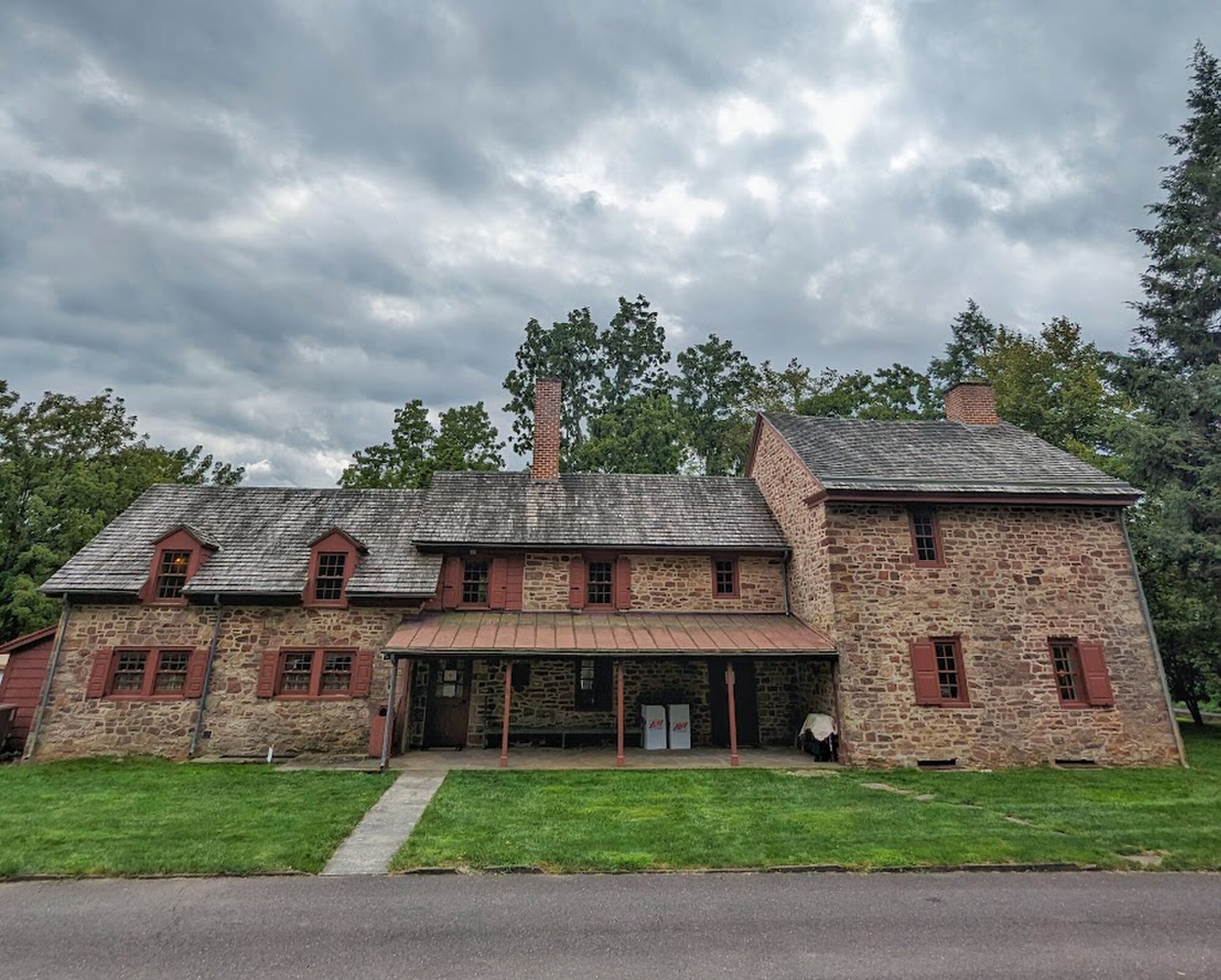
On August 21, 1777, a pivotal Council of War convened at Moland House in Bucks County, Pennsylvania. Thirteen generals met to assess British movements and formulate a plan of action for the Continental Army under General George Washington’s command. Major Generals in attendance included Lord Stirling, Nathanael Greene, Adam Stephen, Anthony Wayne, and the Marquis de Lafayette.
The high‑stakes gathering inside the stone walls of the Moland house on August 21st marked a critical moment of strategic uncertainty for the American high command. With a massive British fleet floating mysteriously off the Atlantic coast, Washington and his senior officers wrestled through a volatile debate to deduce whether the enemy intended to sail north up the Hudson River or strike south toward the capital at Philadelphia. This council also marked the first official moment the twenty‑year‑old Marquis de Lafayette took his seat among Washington’s senior staff following his commission by Congress.
The presence of brilliant young aides like Alexander Hamilton and future leaders like James Monroe turned the Bucks County encampment into a vibrant crossroads where European military traditions fused with American improvisational statecraft. Although the council initially resolved to march toward New York, sudden intelligence of British landings at the Head of Elk forced Washington to pivot toward the bloody fields of Brandywine. The Moland House council endures as a defining snapshot of Washington’s collaborative command style and the forging of a professional army from a patchwork of state militias.
Image from Rgs25 via Wikimedia Commons, CC BY 4.0
