
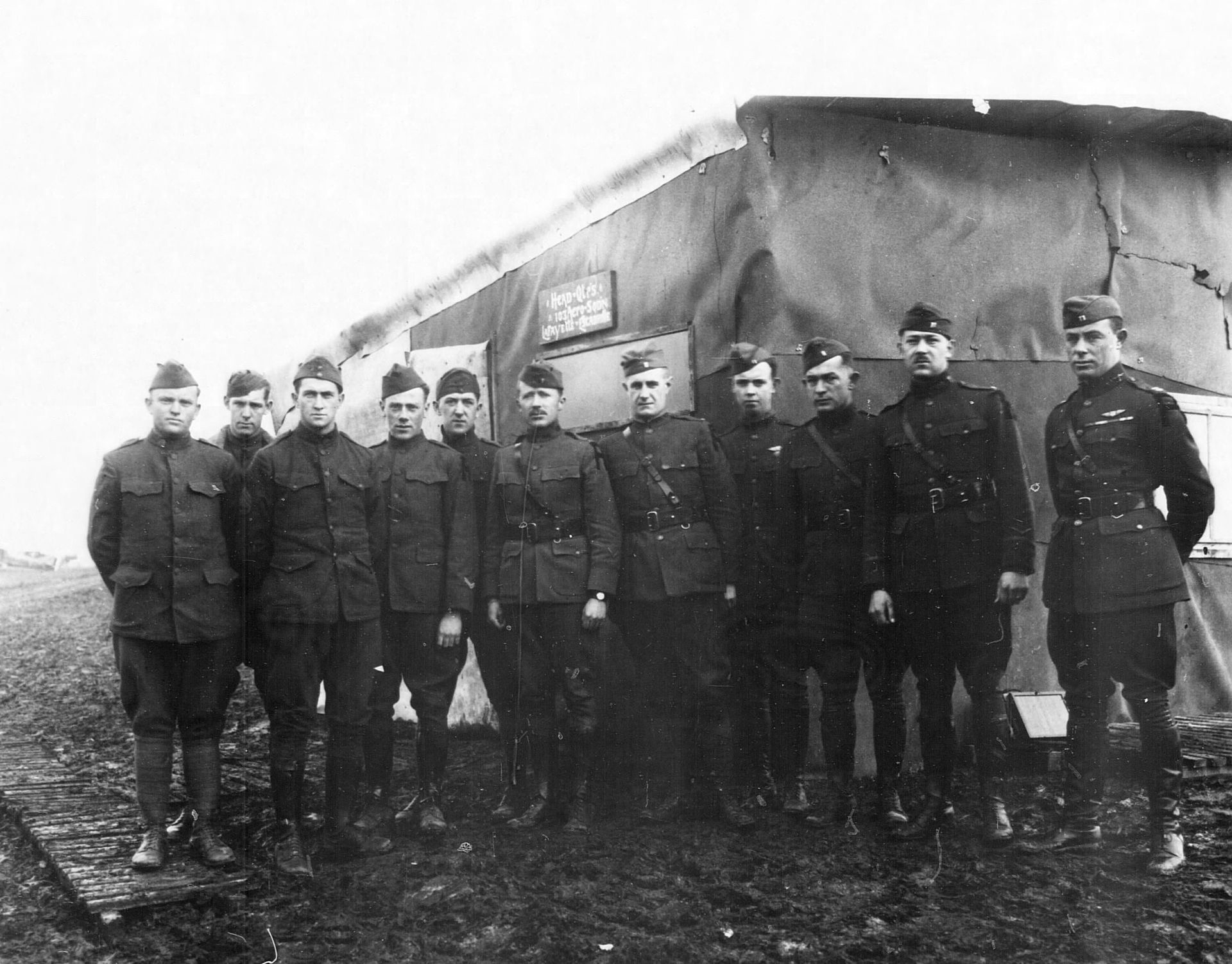
On August 18, 1919, the U.S. 103rd Aero Squadron was officially demobilized. The squadron was commanded by Major William Thaw II, who is considered to be the first American to engage in aerial combat during WWI. The formal demobilization brought a quiet conclusion to the legendary combat career of the very first American aviators to breach the skies of World War I.
Long before the United States officially entered the conflict, Thaw and a daring group of American volunteer pilots had traveled to France to form the famous Lafayette Escadrille, flying advanced Nieuport and Spad fighters under French command. When American forces finally arrived in Europe, these battle-hardened veterans were transferred into the newly minted U.S. 103rd Aero Squadron, providing the raw backbone of tactical expertise that built the American Air Service.
Operating across the bloody sectors of Verdun and the Marne, the squadron claimed over forty-five confirmed aerial victories, establishing a peerless reputation for aggressiveness and technical mastery. The August 1919 demobilization turned these high-flying aces back into ordinary civilians, marking a poignant, transitional moment as the nation rapidly pivoted away from the horrors of the Great War. Their collective legacy permanently established the modern traditions of the United States Air Force, proving that American pilots could comfortably dominate the cutting edge of industrial aerial warfare.
Image: 103rd Aero Squadron Headquarters staff at La Noblette Aerodrome, early 1918 via Wikimedia Commons, public domain
