
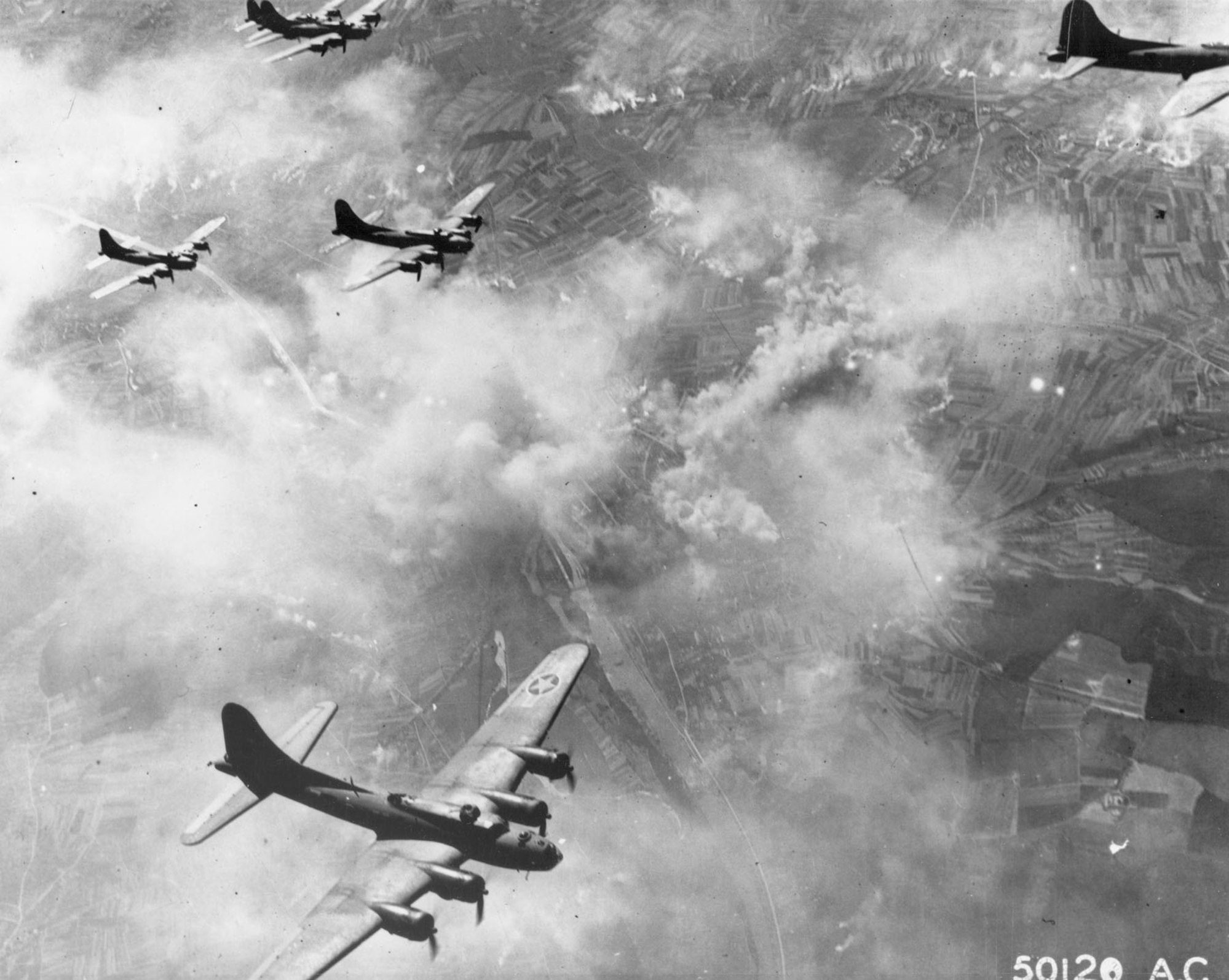
On August 17, 1943, more than 200 Eighth Air Force B‑17 Flying Fortresses thundered into the morning sky over England and began one of the most dangerous deep‑penetration bombing missions of World War II: the unescorted strike on the Messerschmitt aircraft factories at Regensburg. The operation demanded that American aircrews fly hundreds of miles into the heart of Nazi Germany without long‑range fighter protection, relying solely on tight formation flying and raw courage to survive.
As the bombers crossed into enemy territory, they were met by waves of Luftwaffe fighters and dense, boiling curtains of anti‑aircraft flak. The European sky became a high‑altitude inferno — a chaotic, freezing battleground where airmen fought with numb hands inside unpressurized cockpits as oxygen masks iced over and engines caught fire.
Despite the relentless attacks, the B‑17 formations pressed forward, delivering crippling damage to the Regensburg aircraft works. But the cost was staggering: dozens of bombers were lost, hundreds of elite airmen were killed or captured, and the mission exposed the terrifying limits of daylight bombing without fighter escorts.
The August 17th Regensburg strike became a defining moment in the evolution of Allied air strategy, proving that deep raids into Germany were impossible until long‑range escort fighters like the P‑51 Mustang could accompany the bombers all the way to their targets and back.
