
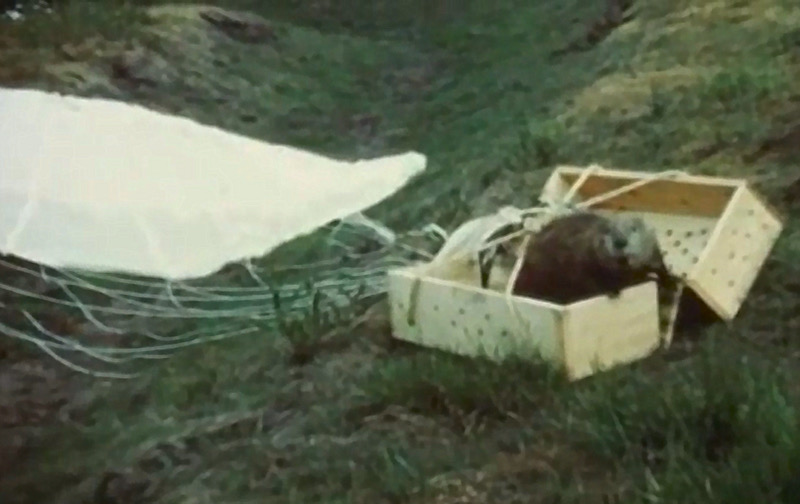
On August 14, 1948, eight of an eventual 76 beavers were parachuted into the Chamberlain Basin wetlands region of Idaho. The Idaho Dept. of Fish and Game determined, correctly, that dropping the beavers by parachute was safer and cheaper than transport by truck. Shown is a beaver in his drop box in 1950.
This extraordinary, highly unconventional conservation effort was a brilliant solution to a severe post-war ecological crisis in the remote Idaho wilderness. Following a massive influx of human settlers that had severely disrupted the natural river systems and beaver populations near local towns, state game wardens needed to quickly relocate the animals into the trackless interior to help rebuild natural wooden dams and restore critical water tables. To transport the animals across rugged, roadless mountain peaks without killing them through the stress of long pack-mule treks, an innovative game warden named Elmo Heter designed a specialized wooden “drop box” that utilized surplus World War II parachutes, automatically popping open the second the container gently touched down on the valley floor. The high-flying operation was a resounding success, successfully establishing a thriving, self-sustaining wetland colony without a single casualty and proving that modern military technology could be creatively harnessed for environmental stewardship.
Image from Idaho Dept. of Fish and Game via Wikimedia Commons, no known copyright, public domain in the US.
