
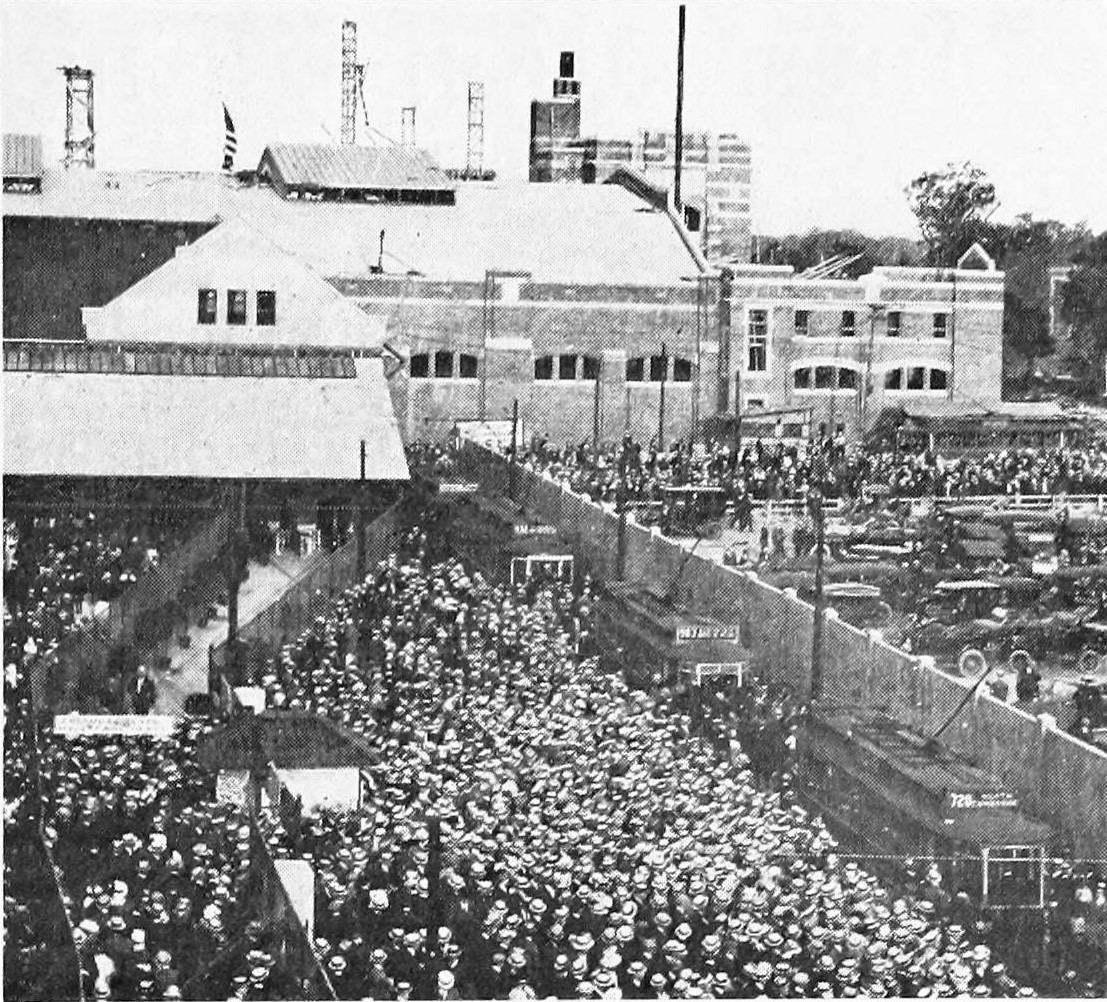
Opening day, August 13, 1915: Crowds surged through the Braves Field Loop to witness the debut of what promoters called ‘the finest baseball park in the world.’ With a capacity over 40,000, Braves Field was the largest stadium in Major League Baseball until Yankee Stadium opened in 1923. Built for speed and strategy, its vast outfields made home runs rare and reshaped the rhythm of the game. Though rivals, the Red Sox played their 1915 and 1916 World Series home games here to accommodate larger crowds. The Braves moved to Milwaukee in 1953, and Boston University later adapted the site—preserving the right-field bleachers and ticket office as part of Nickerson Field. More than a ballpark, Braves Field was a civic stage where sport, infrastructure, and urban identity converged.
The sheer scale of Braves Field was a direct reflection of owner James Gaffney’s deep fascination with classical Roman architecture. Gaffney despised the cheap, wooden “cigar-box” ballparks of the era, opting instead to build a massive, fireproof amphitheater out of structural steel and reinforced concrete. He chose a deliberately extreme 402-foot left-field line and a 550-foot dead center field, creating a sprawling defensive pasture that practically eliminated the possibility of traditional, over-the-fence home runs. This architectural choice turned baseball at Braves Field into a high-stakes chess match of triples, inside-the-park sprints, and elite outfield positioning, cementing its status as an intimidating cathedral of pure, unadulterated athletic strategy.
Image via Wikimedia Commons, public domain
