
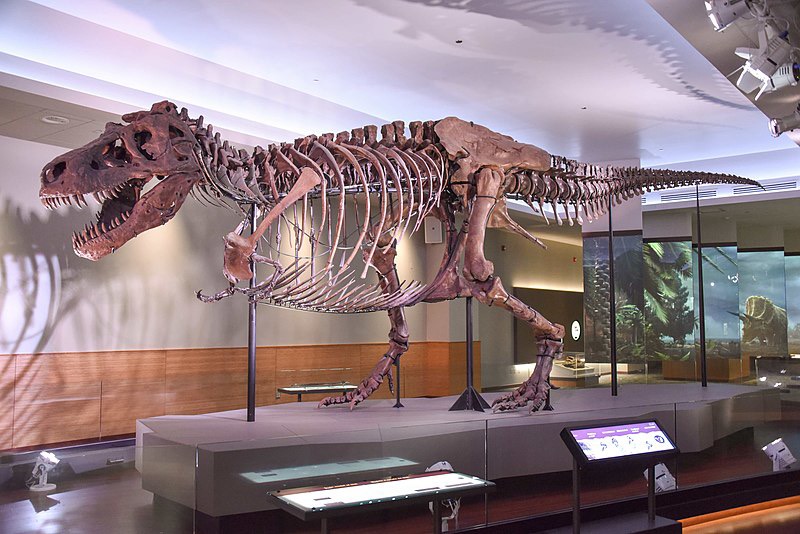
On August 12, 1990, the barren, sun-scorched badlands of South Dakota surrendered one of the greatest paleontological treasures in human history to self-taught researcher Sue Hendrickson. While exploring the crumbling cliffs of the Cheyenne River Indian Reservation during a temporary delay caused by a flat truck tire, Hendrickson spotted a handful of dark, fossilized bone fragments protruding from the base of a sheer cliffside. Her keen eye instantly recognized the distinctive texture of dinosaur bone, prompting a meticulous excavation that would eventually capture the imagination of the global scientific community.
What Hendrickson had stumbled upon was the most complete, remarkably preserved Tyrannosaurus Rex skeleton ever unearthed, a prehistoric marvel that would be affectionately named “SUE” in her honor. Unlike prior T. rex discoveries, which were frustratingly fragmented and missing key skeletal components, SUE was found with more than ninety percent of her massive bone structure completely intact, including delicate gastralia (belly ribs) that rarely survive the fossilization process. The incredible completeness of the specimen allowed paleontologists to map the apex predator’s anatomy with an unprecedented level of structural accuracy.
The discovery ignited a fierce, multi-year legal battle over ownership rights that eventually culminated in a high-stakes public auction, where Chicago’s Field Museum of Natural History secured the specimen for a record-breaking 8.36 million dollars. Today, SUE stands as the crown jewel of the museum’s exhibition halls, offering visitors an awe-inspiring look at a twelve-foot-tall, forty-foot-long apex predator from the Late Cretaceous epoch. Beyond its sheer visual spectacle, the fossilized skeleton continues to serve as an invaluable scientific resource, allowing researchers to study dinosaur growth rates, bone pathologies, and the ancient biomes of North America.
