
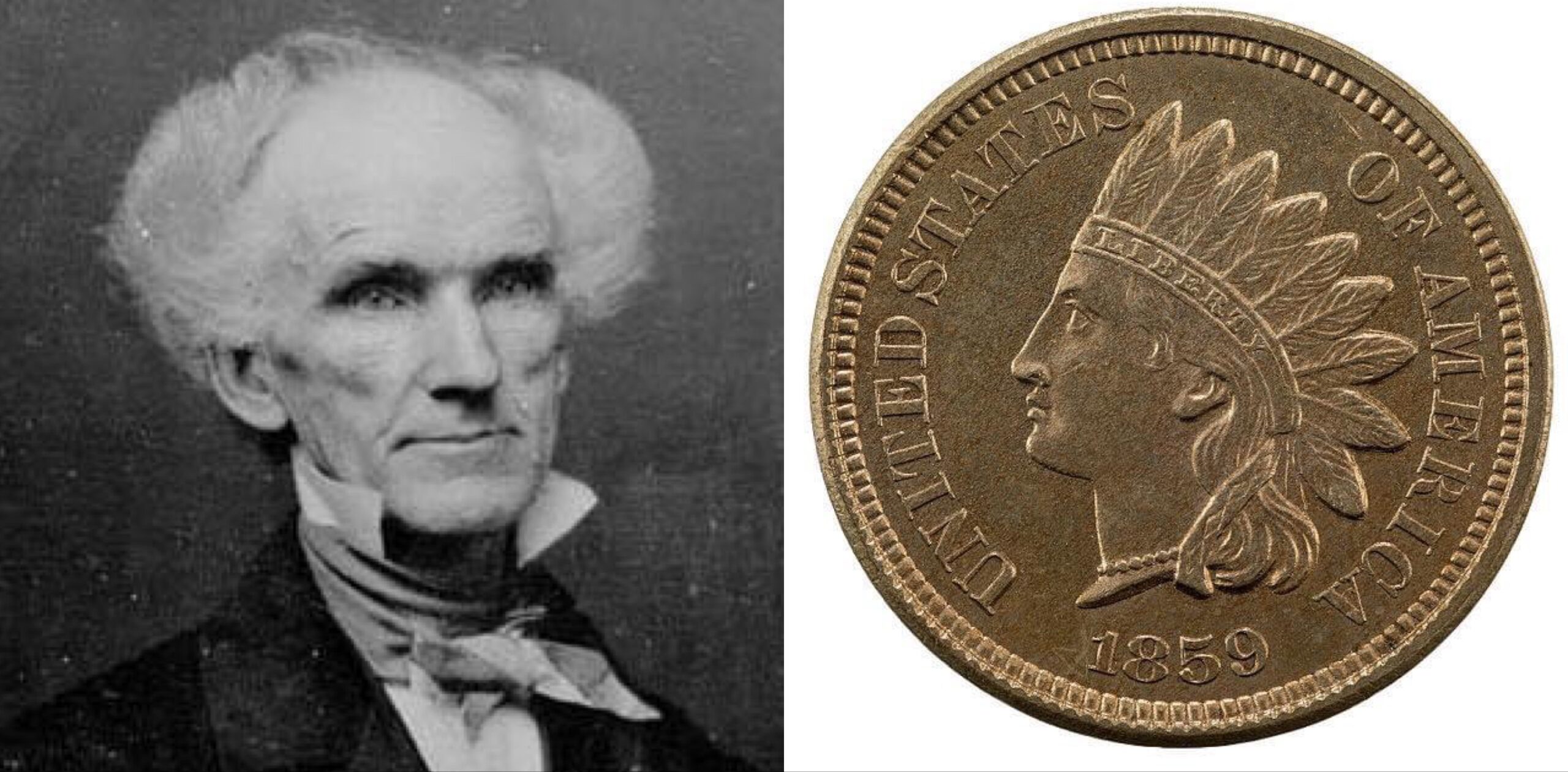
August 11, 1794, marked the birth of James B. Longacre in Delaware County, Pennsylvania, a man whose artistic eye would dictate the visual identity of American currency for a generation. Rising through the ranks of classical engravers, Longacre was appointed as the Chief Engraver of the United States Mint in 1844, a position he held during a golden age of American coinage design. Throughout his highly influential career, he sculpted some of the nation’s most iconic early coins, including the Liberty Head double eagle and the historic two-cent piece.
Longacre’s most enduring and widely circulated masterpiece was the iconic Indian Head cent, which officially entered production in 1859 to replace the short-lived Flying Eagle cent, another of his personal designs. Following its release, a popular and widespread historical myth emerged claiming that the Native American figure on the coin was modeled after Longacre’s young daughter, Sarah, who had allegedly tried on a chieftain’s headdress in the mint. In reality, Longacre firmly denied this charming rumor, explaining that the profile was an entirely idealized artistic creation.
To design the coin, Longacre took a traditional, classical Grecian profile of Lady Liberty but intentionally substituted her European liberty cap with a Native American feather headdress. He chose this specific motif to create a numismatic design that was uniquely, distinctly, and aggressively American, rather than a mere copy of prevailing European monarchical imagery. The resulting coin became an aesthetic triumph, circulating through the pockets of millions of Americans for over half a century as an enduring symbol of national identity.
