
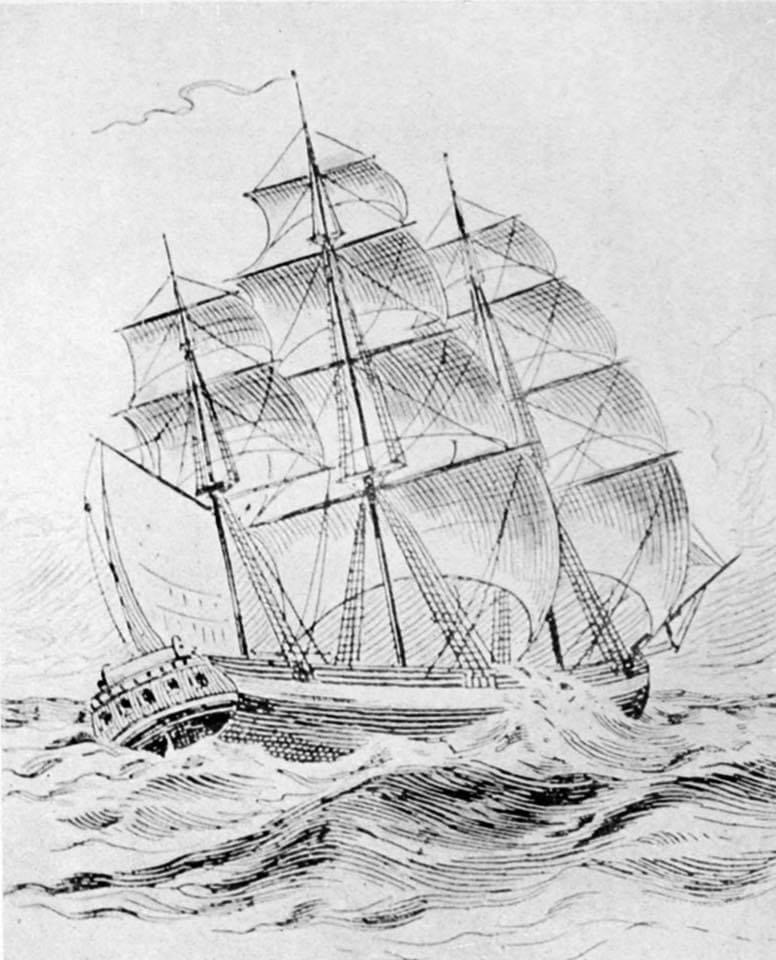
On August 9, 1790, after a three-year voyage, The Columbia becomes the first American vessel to circumnavigate the world.
The return of The Columbia Rediviva to Boston Harbor under the command of Captain Robert Gray was a monumental, system-shaking triumph that instantly announced the arrival of the United States on the global maritime stage. The grueling, three-year expedition was a massive commercial gamble financed by a syndicate of wealthy Boston merchants who wanted to bypass the British and Spanish monopolies on global trade. By sailing down around Cape Horn, trading iron tools for sea otter pelts with Indigenous tribes in the Pacific Northwest, and then exchanging those valuable furs for tea, porcelain, and silk in Canton, China, the crew successfully mapped out a highly lucrative global trade circuit.
The successful voyage permanently transformed the economic geography of the young republic, proving that American wooden hulls could reliably compete in the far-flung markets of Asia. Beyond the immense financial profits, Gray’s exploration of the Pacific coastline laid the foundational legal and geographic claims for the United States’ eventual expansion to the Pacific Ocean, turning a daring merchant voyage into a historic geopolitical anchor that would secure the Oregon Country for generations of American settlers.
Image: Columbia Rediviva from “The Columbia River: Its History, Its Myths, Its Scenery, Its Commerce” via Wikimedia Commons, public domain
