
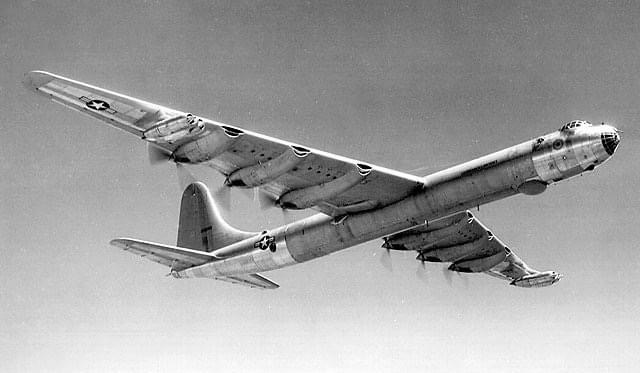
The Convair B-36 made its first flight on August 8, 1946. Named “The Peacemaker,” the plane was designed to carry nuclear bombs from within the US to the USSR. Later models were powered by both propeller and jet engines – “six turning and four burning.” It was replaced by more advanced planes in the 1950s.
The maiden flight of this colossal aircraft took place just one year after the conclusion of World War II, serving as the definitive, heavy-metal symbol of the newly emerging Cold War. With a massive wingspan that remains the largest of any piston-powered aircraft ever built, the B-36 was engineered out of pure geopolitical desperation; if Great Britain had fallen during the war, the United States needed a bomber with enough range to strike mainland Europe directly from North American airfields.
Operating the B-36 was a monumental challenge against engineering limits, leading to its famous hybrid engine configuration. To get the massive, heavily armored bomber off the ground with a full nuclear payload, engineers eventually added four turbojet engines to supplement the six massive propeller engines, prompting crews to coin the legendary phrase, “six turning and four burning.” While it never dropped a single weapon in actual combat, its terrifying presence as a strategic nuclear deterrent successfully stabilized the early years of the atomic age before the rapid rise of supersonic jet technology rendered it obsolete.
Image: USAF via Wikimedia Commons, public domain in the US
