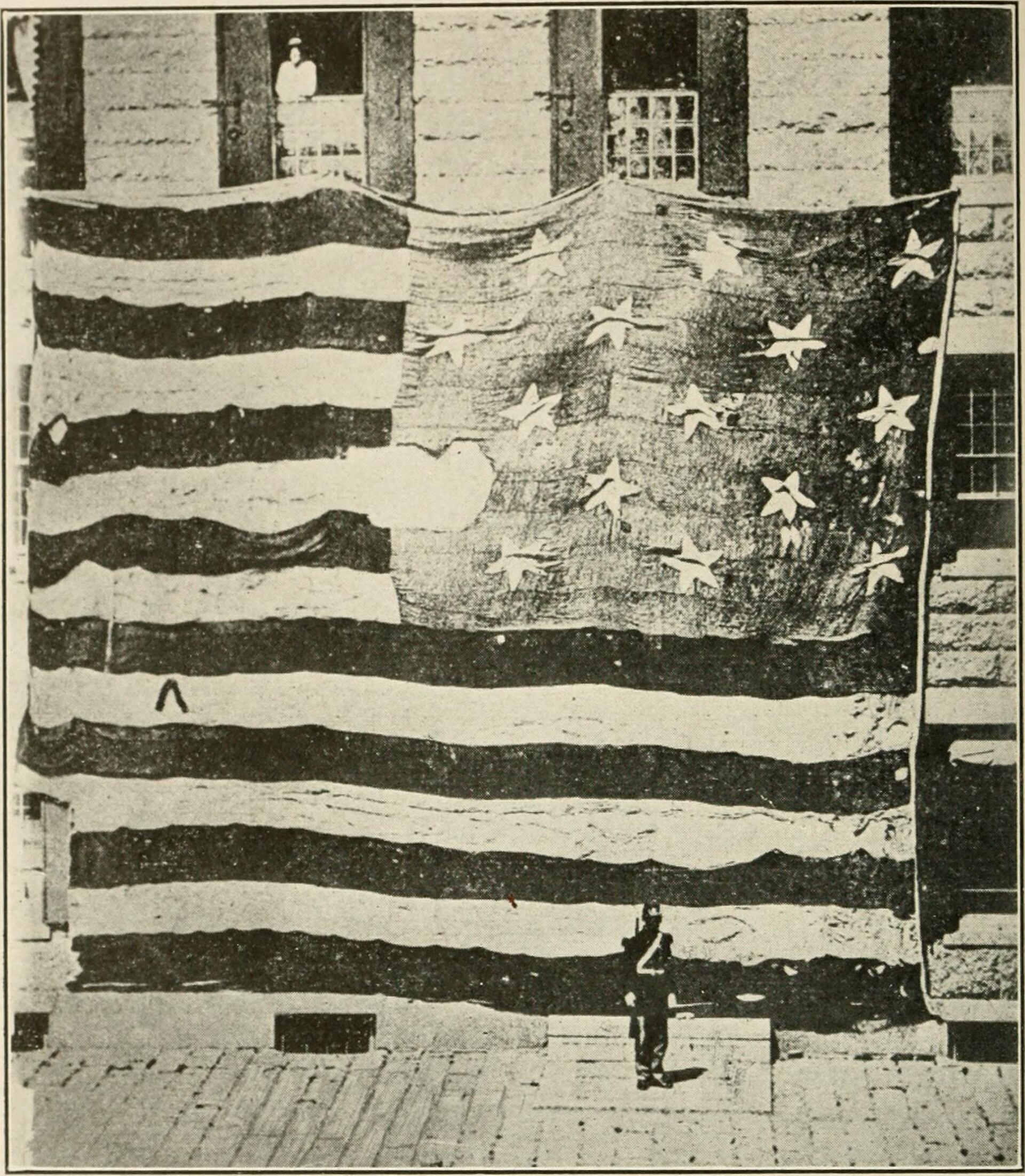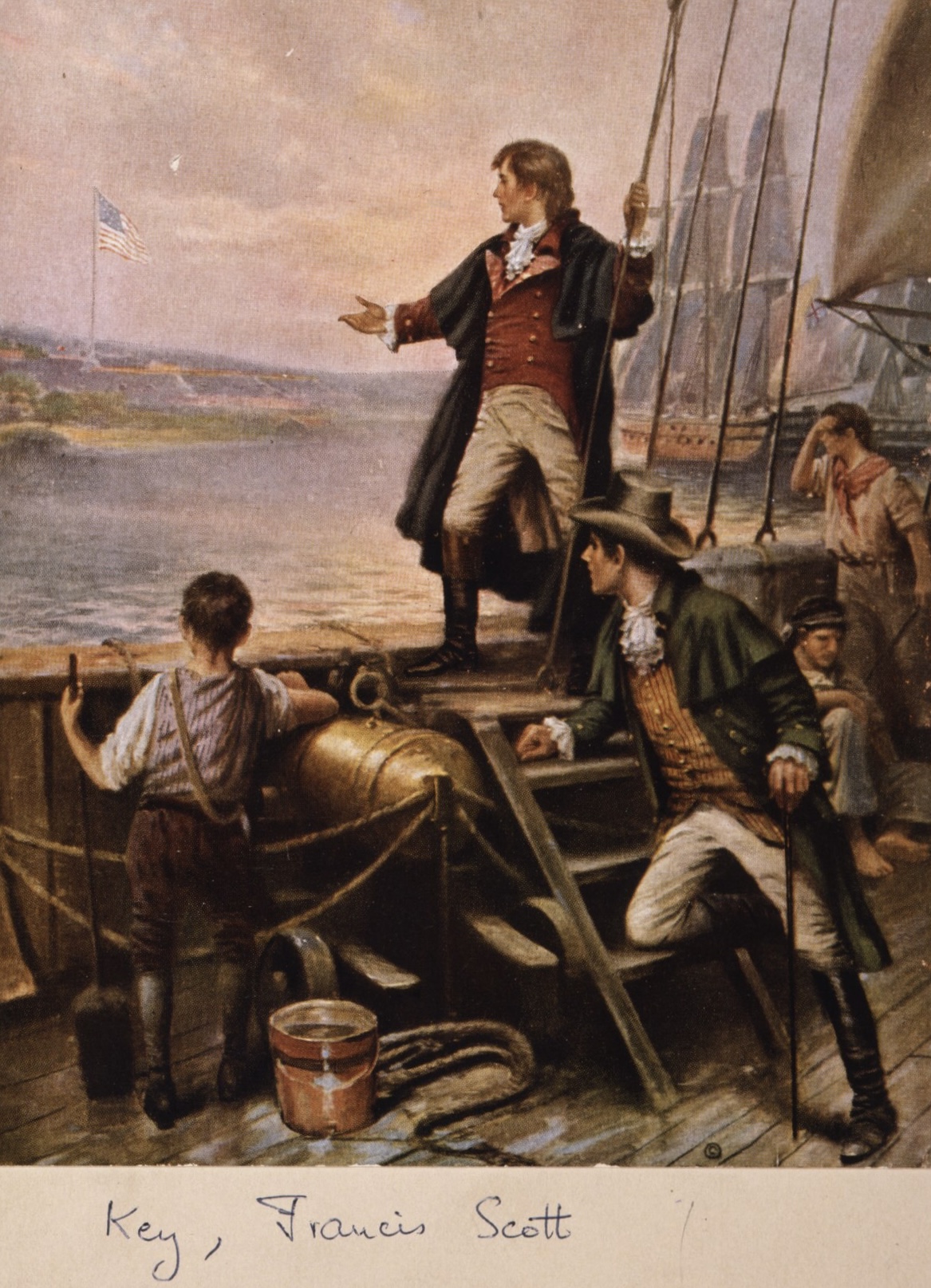
Born August 1, 1779, Francis Scott Key had a long career as a lawyer and amateur poet. In the scene above he’s shown inspired by the sight of his country’s flag after an intense battle during the War of 1812. Key’s poem, “Defence of Fort M’Henry,” would become “The Star-Spangled Banner,” our national anthem.
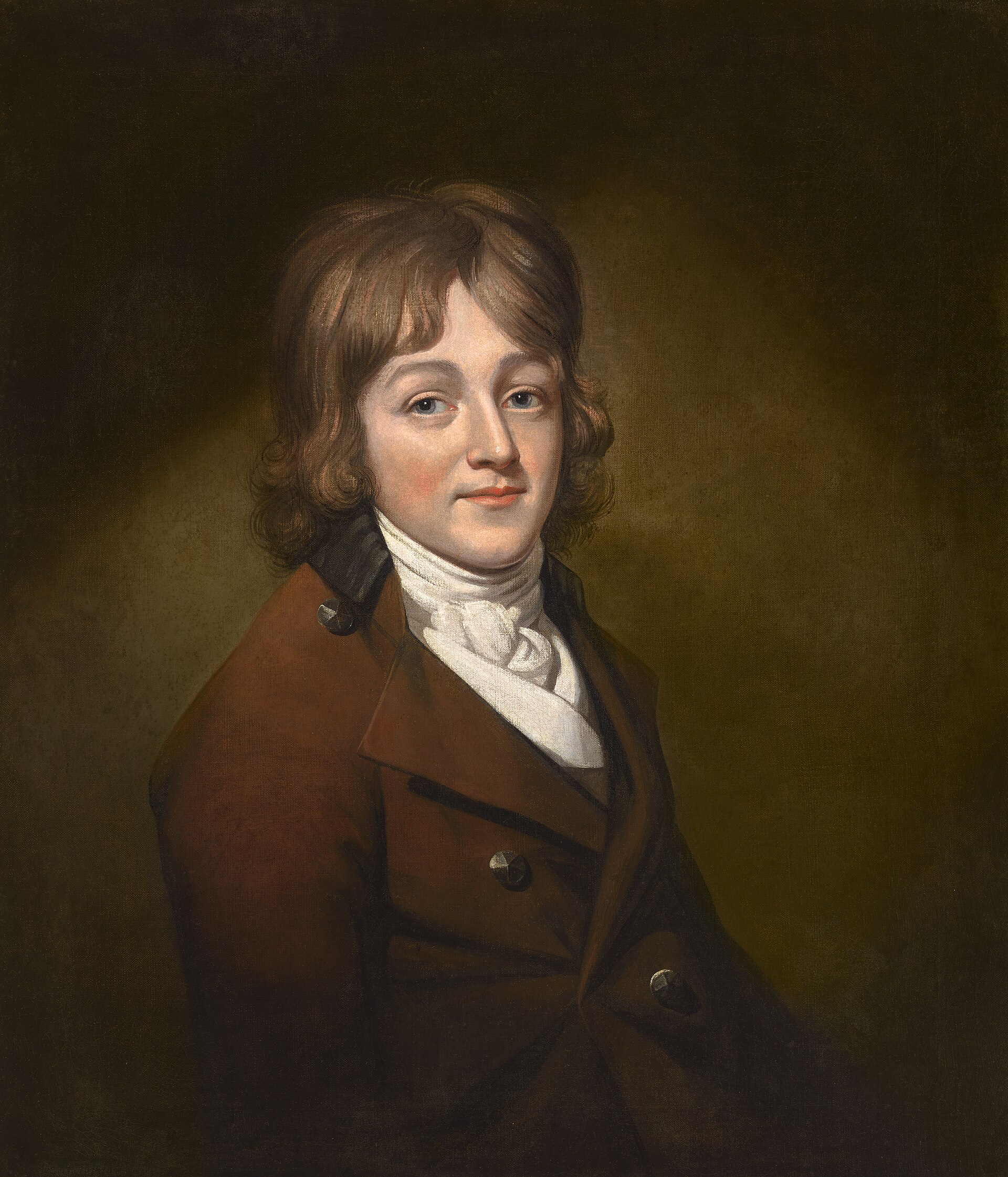
What many do not realize is that Key was held captive aboard a British vessel during the bombardment of Fort McHenry. Sent as a legal envoy to negotiate the release of an American prisoner, he was detained by the British simply because he had overheard their battle plans. Stripped of control, he spent a sleepless night watching the relentless assault on Baltimore, fully expecting the fort to fall.
When dawn broke and the massive 30-by-42-foot garrison flag was raised instead of a white flag of surrender, the emotional relief led him to jot down lines of poetry on the back of a letter. Key was an amateur poet with little musical training and did not compose the music; within days, publishers printed his poem with a note to sing it to the tune of a popular British song, creating the anthem we know today.