
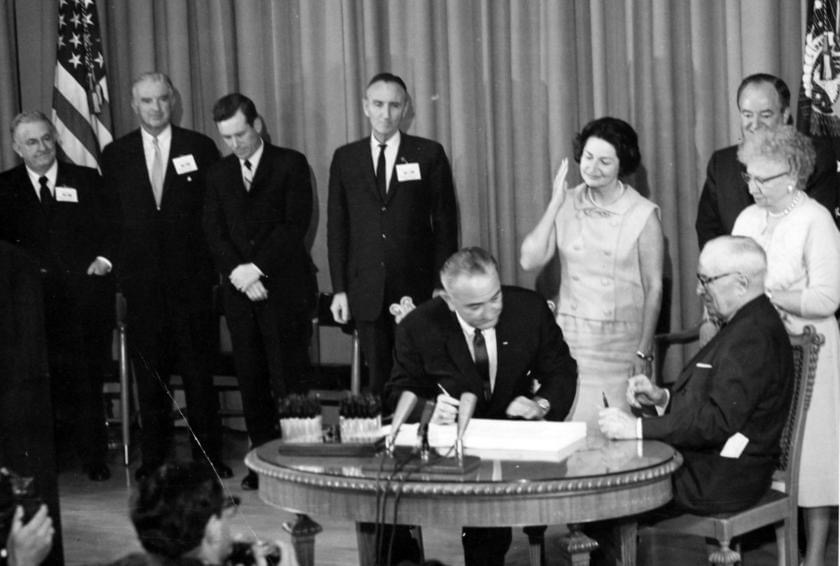
The signing of the Social Security Amendments of 1965 by President Lyndon B. Johnson at the Truman Library on July 30, 1965, was a massive legislative achievement fueled by genuine empathy. For generations, growing old in America meant facing the terrifying prospect of financial ruin brought on by failing health. By establishing Medicare and Medicaid, the American government expanded its collective responsibility, deciding that a great society must care for its most vulnerable citizens when their bodies begin to fail.
The location of the signing was a deliberate tribute to the emotional history of this struggle. Former President Harry Truman had fought bitterly for national health insurance twenty years prior, enduring vicious political attacks that broke his legislative efforts but not his conviction. By traveling to Missouri to sign the bill alongside an aging Truman and presenting him with the very first Medicare card, Johnson transformed a policy signing into a poignant moment of historical vindication and intergenerational gratitude.
This moment signaled a profound evolution in how the state viewed the human body and spirit. It affirmed that healthcare is a matter of basic human dignity rather than a luxury reserved for the affluent. The creation of these programs provided millions of elderly and low-income Americans with a sense of security, showing that a nation’s laws can serve as a direct expression of institutional love.
