
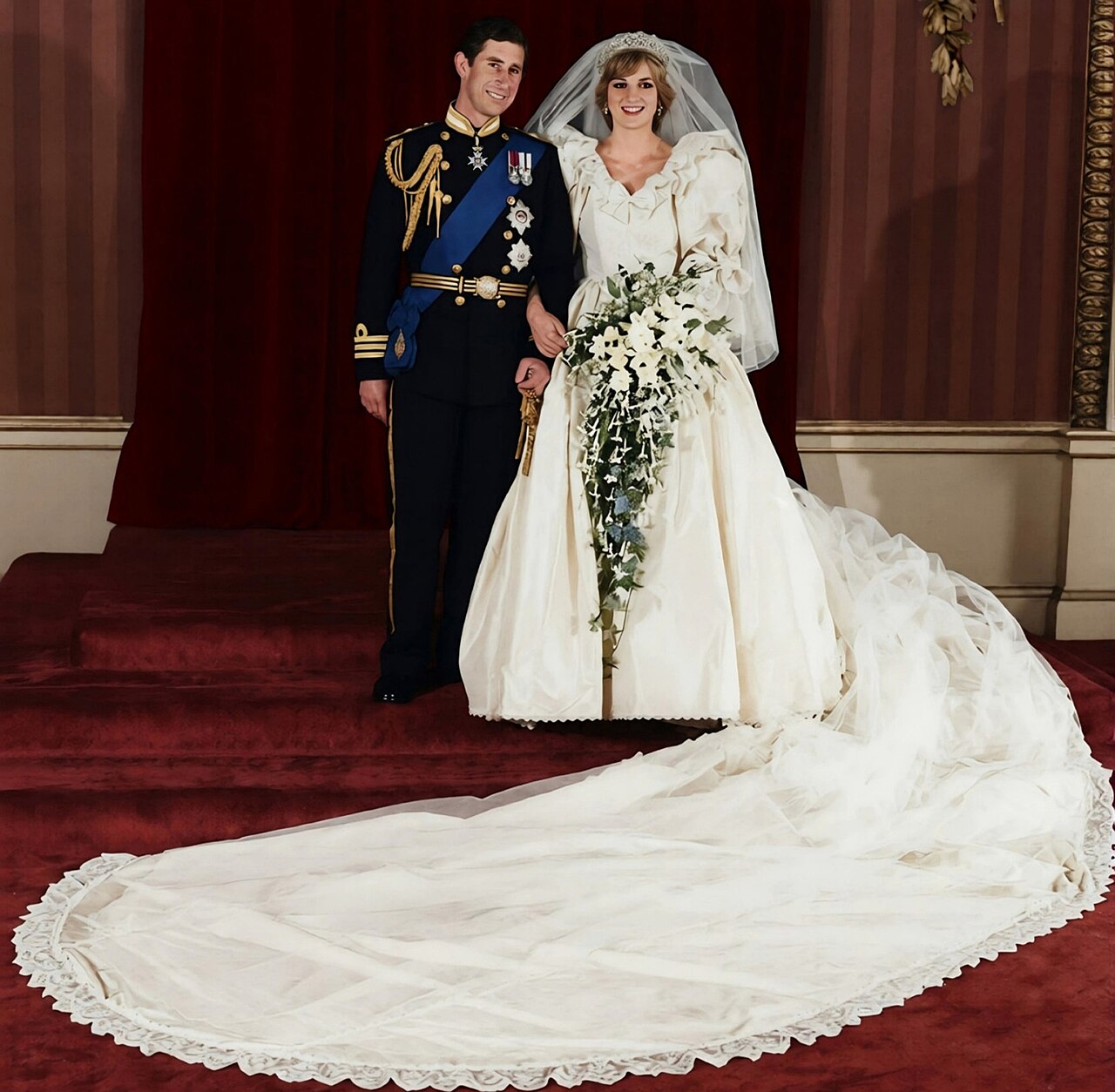
In what was widely hailed as the “wedding of the century,” Prince Charles married Lady Diana Spencer in a spectacular ceremony at St. Paul’s Cathedral in London, England, on July 29, 1981. Over 750 million people across the globe tuned in to watch the broadcast, including tens of millions of Americans who woke up in the early hours of the morning to witness the event. The celebration offered a brief, welcome escape from the economic anxieties and high inflation gripping both the United States and Britain during the early 1980s, sparking an intense, decades-long American obsession with the young princess.
Beneath the fairy‑tale spectacle lay a painful emotional reality the cameras never captured. Diana, just 20 years old, was stepping into an ancient institution that demanded complete conformity, while Charles remained profoundly entangled with his past love. The overwhelming media scrutiny that began on this day created a suffocating environment, fracturing the couple’s relationship before it ever had a chance to grow, and turning Diana into a permanent fixture of American celebrity culture and tabloid fascination.
This historic wedding stands as a powerful study in the heavy burden of public expectation and the universal desire for storybook romance. In the years that followed, Diana’s deep humanitarian connections with the American public—particularly her groundbreaking charity work with HIV/AIDS patients in New York—solidified her place in the hearts of the nation. The eventual collapse of the royal marriage revealed the painful truth hidden behind the palace facade, cementing Diana’s legacy in America not as a distant storybook princess, but as a deeply human, vulnerable figure who won the world’s heart by openly sharing her own struggles and heartbreak.
