
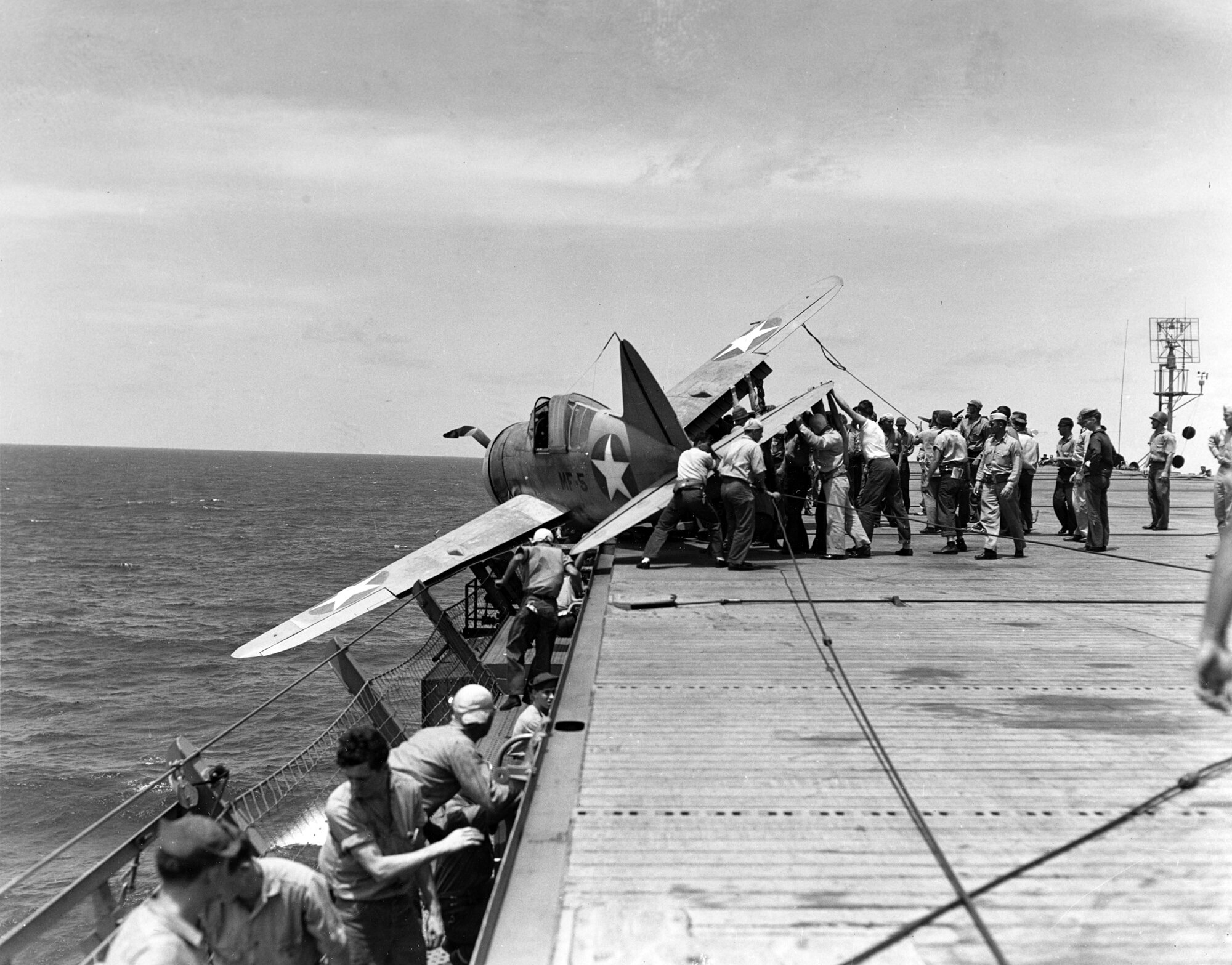
Time is of the essence on July 25, 1942, as the crew of the USS Long Island works frantically on the flight deck to stabilize a Marine squadron Buffalo fighter plane. Following a rough crash landing, the aircraft’s landing gear collapsed, causing it to skid dangerously across the deck and nearly pitch over the side into the ocean. The archival photograph captures the raw tension and rapid damage-control coordination required to secure the multi-ton warplane amid the high-stakes environment of World War II naval operations.
An overlooked layer of this event is its place in the evolution of naval aviation tactics. The USS Long Island was America’s very first escort carrier (CVE)—a converted mercantile vessel designed to provide vital air cover on a budget. This specific incident exposed the extreme hazards of operating high-performance aircraft on incredibly short, narrow wooden flight decks, yielding brutal, real-time data that directly altered how the U.S. Navy engineered later aircraft arrestor gear and trained flight deck crews for the Pacific Theater.
