
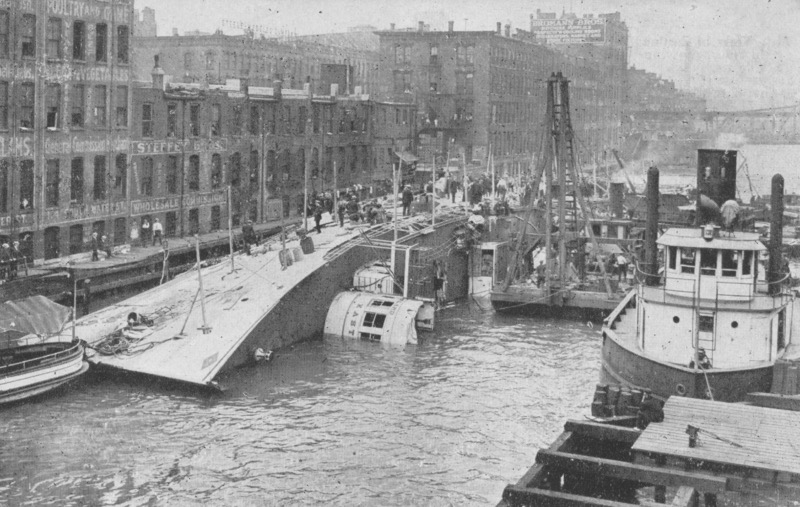
On the rainy morning of July 24, 1915, the SS Eastland sat docked in the Chicago River, filled with more than 2,500 Western Electric workers and their families preparing for a company picnic. The ship had long been known for dangerous stability issues, but new federal safety regulations passed after the Titanic disaster required additional lifeboats and heavy equipment on her upper decks. The added weight shifted her center of gravity, making her even more top‑heavy.
Within minutes, the Eastland rolled onto her side, trapping hundreds inside the hull and killing 844 people — most of them young immigrant workers. The tragedy remains one of the deadliest maritime disasters in American history. Its cruel irony is unmistakable: safety laws intended to protect passengers at sea contributed directly to the catastrophe. The Eastland disaster stands as a sobering reminder that well‑intentioned reforms can become lethal when divorced from engineering reality.
