
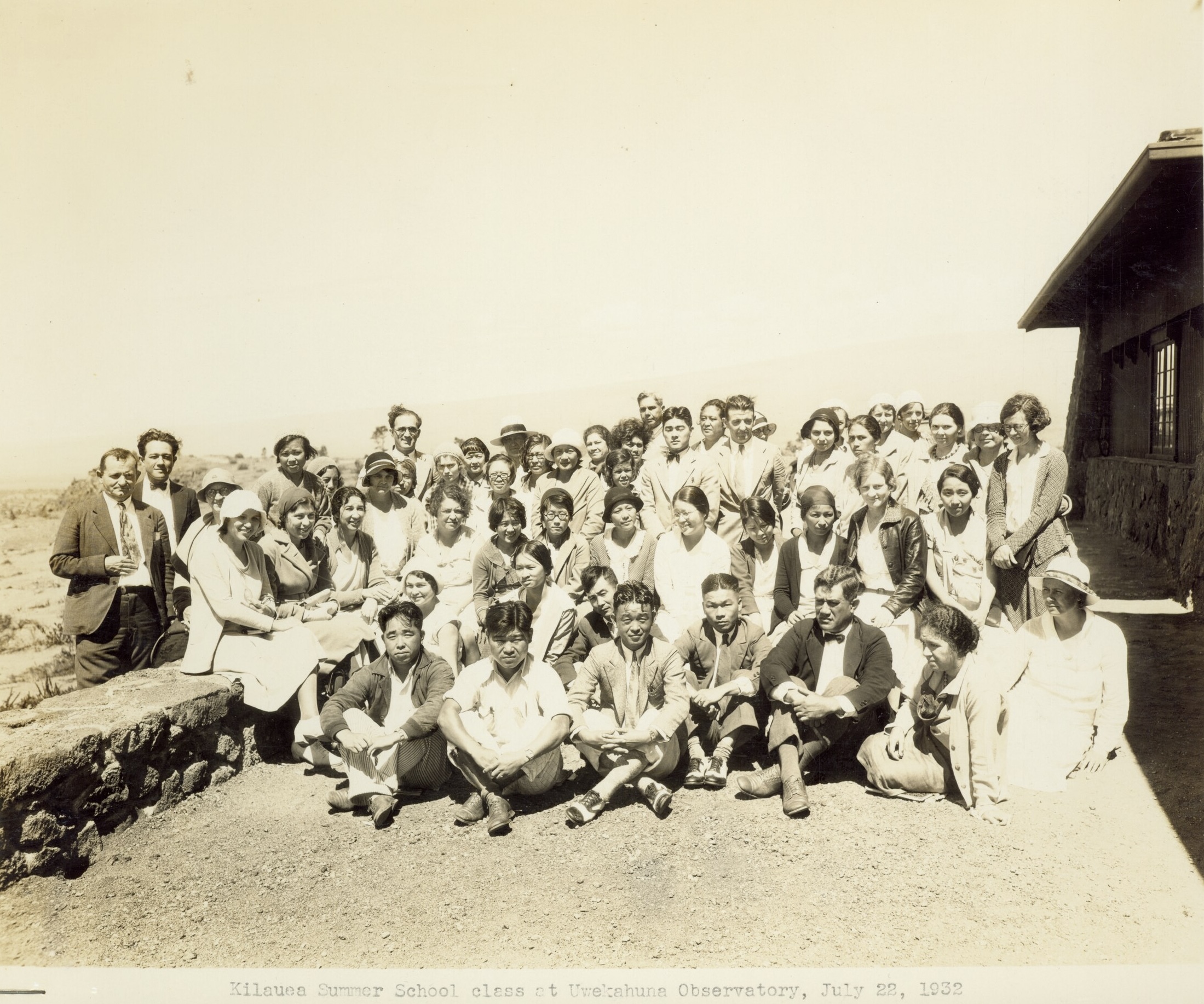
On July 22, 1932, a group of summer scholars gathered on the precipice of Halemaʻumaʻu crater at the edge of the world. The Uwekahuna Observatory, perched precariously on the high cliffs of Kīlauea’s caldera, served as the birthplace of modern American volcanology. While these students scrawled notes on seismic shifts and molten basalt, they were participating in a profound shift in human perspective: transitioning from viewing nature as an unpredictable, vengeful force to a living, breathing laboratory of Earth’s creation.
The unmentioned heartbeat of this photograph is the silent, mutual respect between Western science and indigenous Hawaiian legacy. Years prior to this class, early geologists at the observatory relied heavily on the traditional knowledge of native guides who understood the subtle moods of the volcano. As these students studied the cooling crust under the mid-summer sun, they stood on ground deeply sacred to the goddess Pele, marking a historic moment where academic curiosity and ancient spiritual landscape shared the exact same thin, sulfurous air.
