
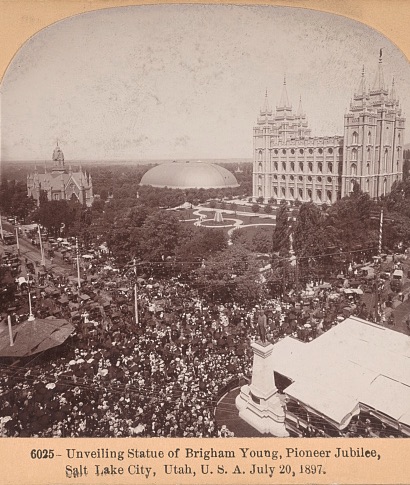
On July 20, 1897, a massive crowd gathered in Salt Lake City, Utah, to witness the official unveiling of the Brigham Young monument during the state’s Pioneer Jubilee. The ceremony marked the fiftieth anniversary of the Mormon pioneers’ arrival in the valley, celebrating their grueling cross‑country migration and the establishment of a permanent home in the American West.
The unveiling of the bronze monument was a calculated effort by local leaders to project a new image of stability and national patriotism to the rest of the United States. For decades, Utah had clashed with the federal government over religious practices, resulting in military standoffs and delayed statehood. By framing the Jubilee around shared American pioneer virtues — endurance, hard work, and western expansion — the monument signaled that Utah had moved beyond its turbulent, isolated past and was ready to integrate fully into the economic and cultural fabric of the nation.
Image via LOC, no known restrictions
