
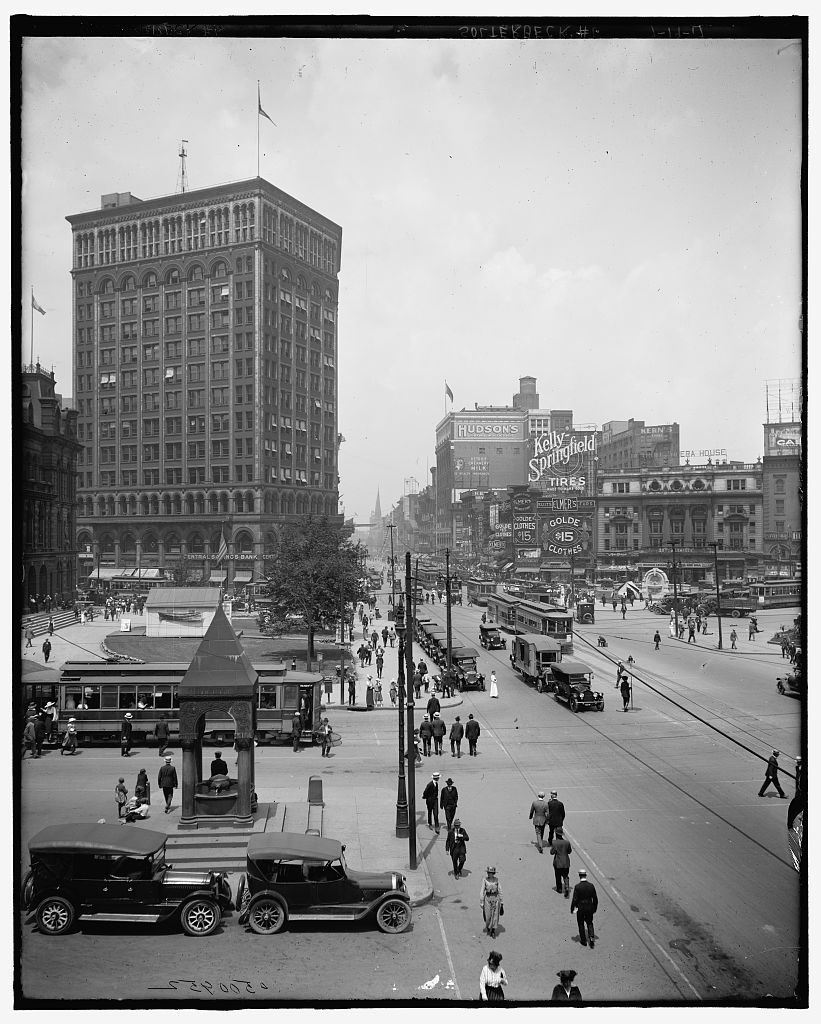
Woodward Avenue, Detroit — July 19, 1917. Just three months after the United States entered World War I, Detroit was already shifting into its wartime stride. This image captures a city in the early stages of mobilization: streetcars hum through the haze, storefronts bustle with everyday life, and behind it all, the industrial engines of Michigan begin turning toward military production. As thousands of young men registered for the draft and factories recalibrated their output, the heartbeat of Woodward Avenue echoed a nation not preparing for war, but already immersed in it.
Beneath that everyday bustle lay a demographic transformation that would permanently reshape Detroit. As automobile plants halted consumer car production to build Liberty aircraft engines and armored vehicles, the military draft created a severe labor shortage. To fill the gap, industrial recruiters turned south — triggering one of the earliest and largest waves of the Great Migration. Tens of thousands of Black workers left the rural South for Detroit’s wartime factories, transforming the city from a traditional Midwestern manufacturing hub into a vibrant, racially diverse cultural powerhouse.
Image via Library of Congress, no known restrictions
