
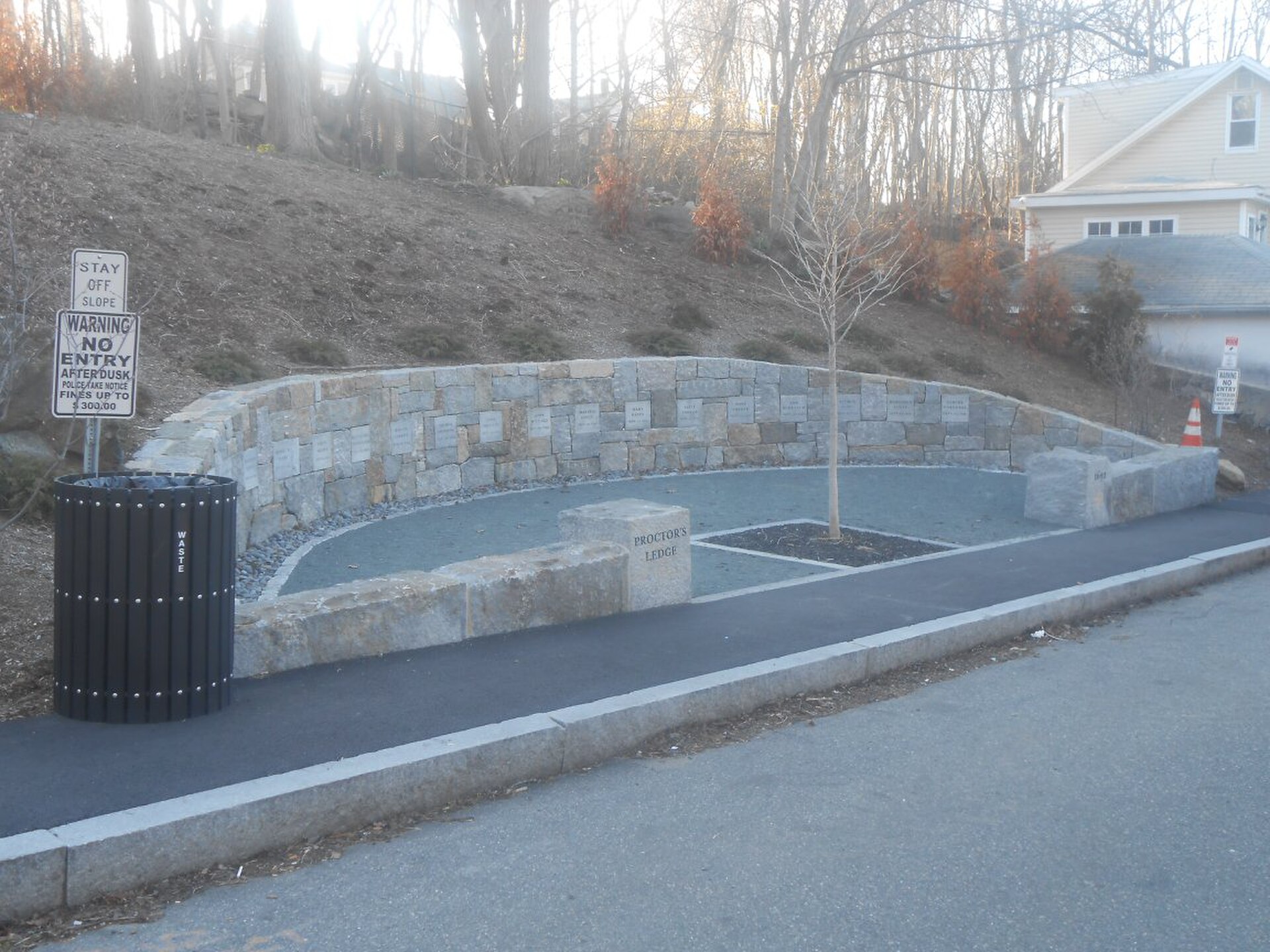
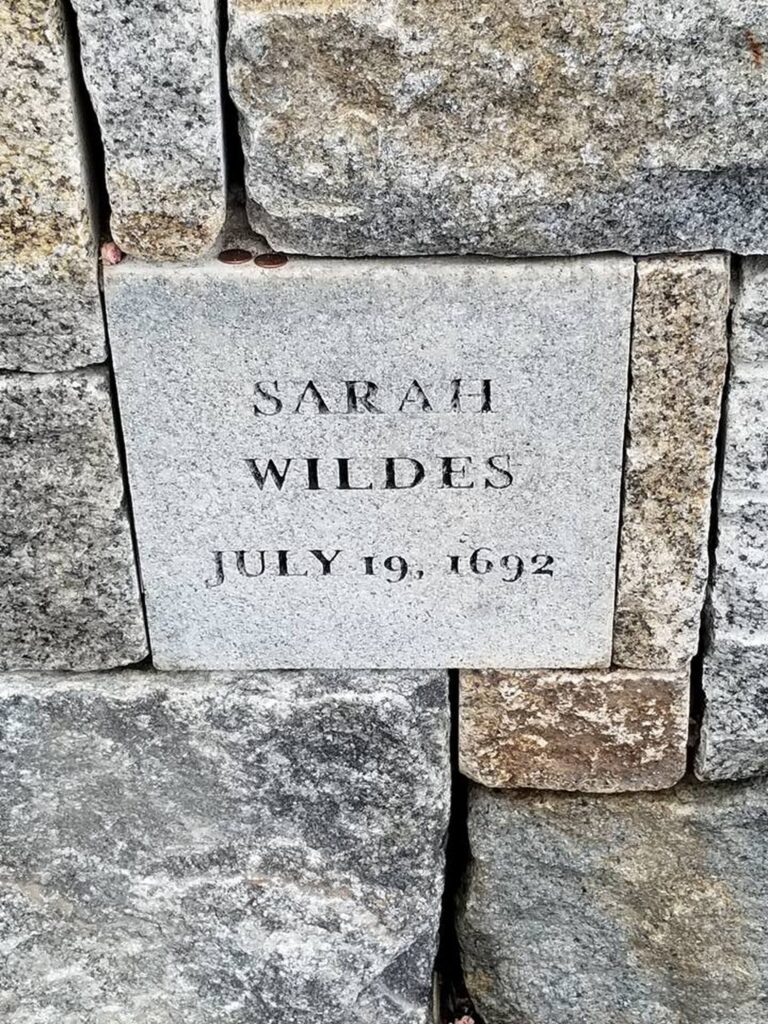
On July 19, 1692, five women — Sarah Good, Elizabeth Howe, Susannah Martin, Rebecca Nurse, and Sarah Wildes — were led to their deaths during the Salem witch trials. Their executions took place at Proctor’s Ledge, a rocky outcrop at the base of Gallows Hill. For generations, local folklore placed the hangings at the hill’s summit, imagining a dramatic, elevated stage for the tragedy. But in 2016, a team of historians and geographers conclusively identified the true site: a modest ledge visible from nearby colonial homes and easily reached by a simple horse‑drawn cart. Today, a quiet semicircular memorial marks the exact location, with individual granite stones honoring each victim.
The shift from the imagined summit to the rocky ledge reveals a chilling truth about how Salem’s townspeople actually experienced the executions. Generations assumed the hangings occurred on a distant peak — a grim warning cast toward the wilderness. Instead, Proctor’s Ledge places the tragedy directly within the neighborhood, at the back edge of ordinary homes. Families would have seen the crowd gather, heard the commotion, and witnessed the state‑sanctioned violence unfold almost at their doorsteps. This proximity transforms the trials from a remote spectacle into an intimate, inescapable trauma that haunted the community for centuries.
Images via Wikimedia Commons, Creative Commons Attribution–ShareAlike 4.0
