
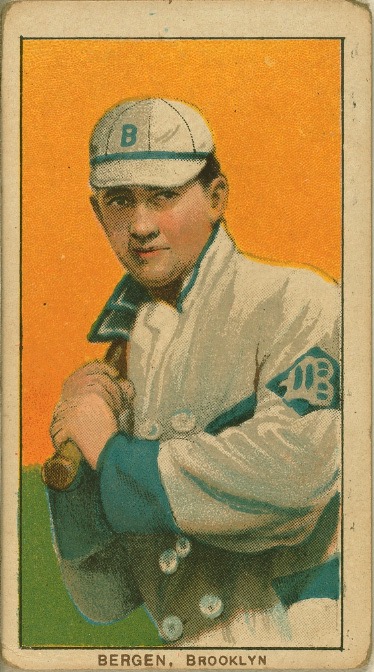
On July 17, 1909, Brooklyn Dodgers catcher Bill Bergen finally snapped a historic slump when a slow infield grounder took a strange hop and bounced off the pitcher’s glove, allowing him to scramble safely to first base. The lucky single ended an agonizing streak of 45 consecutive hitless at‑bats, a record of futility that stood for more than a century.
Despite being statistically one of the weakest hitters in Major League Baseball history — finishing with a .170 lifetime average — Bergen was considered indispensable. His defensive skill behind the plate was so extraordinary that base runners refused to attempt steals when he was catching. His record was finally surpassed in 2011 by San Francisco Giants infielder Eugenio Vélez (0‑for‑46), and again in 2019 when Chris Davis reached 0‑for‑54.
Bergen’s career reveals a forgotten truth about early baseball: defense was often valued more highly than offense, especially for catchers. In an era before modern protective gear, catching was brutally dangerous, and teams prized players who could survive the position. Bergen’s glove kept him in the majors long after his bat failed him, making him a symbol of baseball’s gritty early years.
Image Source: Public domain

Interesting