
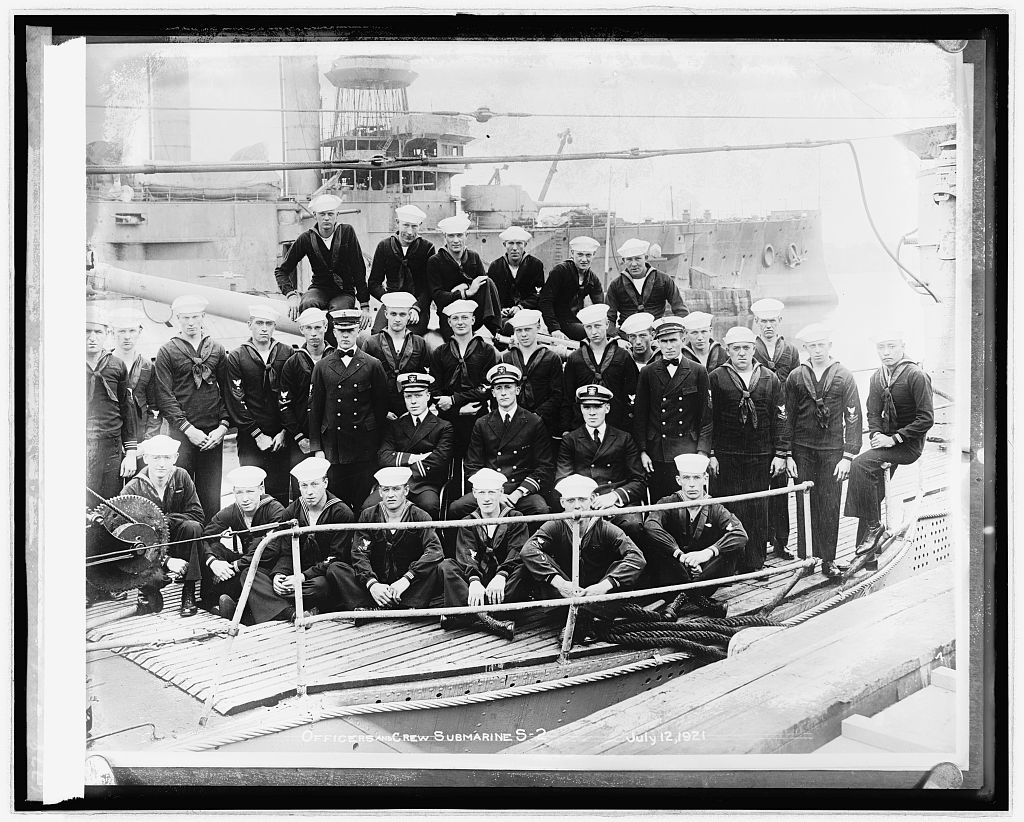
Officers and crew of the U.S. Navy Submarine S‑2 pose for a photograph together on July 12, 1921. At the close of World War I, the U.S. Navy discovered that captured German U-boats were far superior to American designs—diving four times faster and boasting vastly superior long-range ocean capabilities. In response, the Navy launched the experimental S-class program to catch up to German technology, turning vessels like the S-2 into high-stakes engineering prototypes.
Serving aboard these early, experimental submarines was an incredibly grueling and claustrophobic ordeal. These primitive vessels lacked modern air conditioning, causing interior temperatures to regularly climb past 100 degrees Fahrenheit while deep underwater. Life inside the cramped steel hull was a sensory assault, heavy with the suffocating scent of diesel fuel and volatile battery gases.
The fierce, unspoken brotherhood visible in the steady gaze of this crew was forged in the absolute, life‑or‑death trust required to survive together as they tested the dangerous limits of early American undersea warfare.
Photograph via Library of Congress, no known restrictions.
