
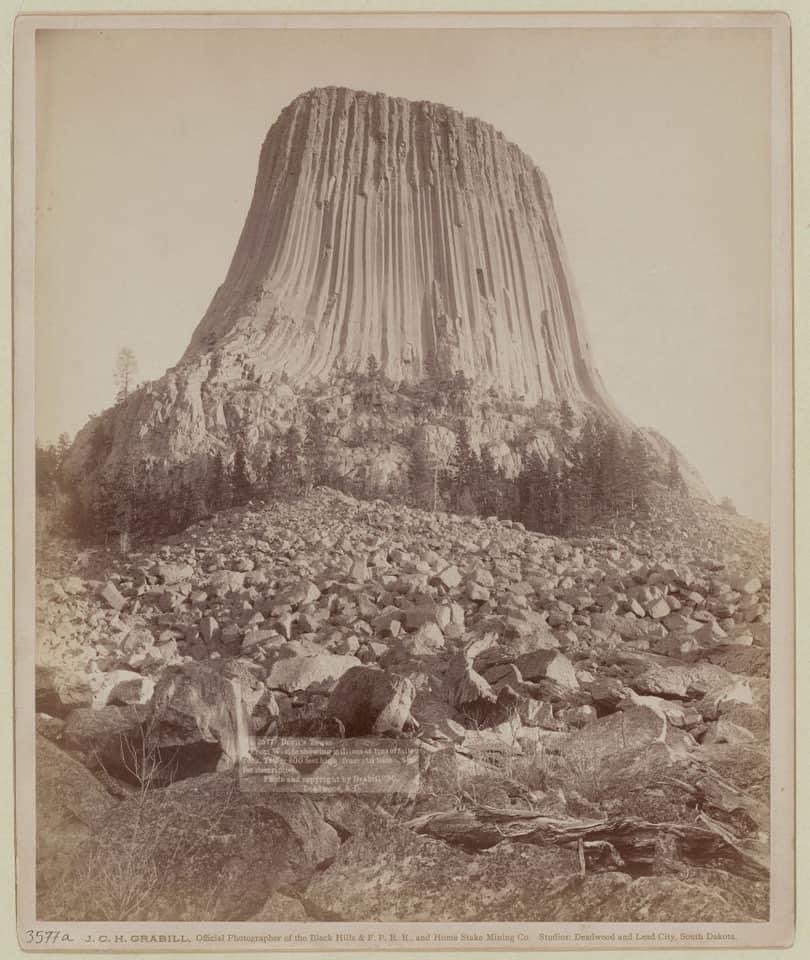
On July 10, 1890, Wyoming officially entered the Union as the 44th state, inheriting a vast landscape deeply rooted in Indigenous spiritual traditions long before Euro-American settlement. To more than twenty Northern Plains tribes—including the Lakota, Cheyenne, Kiowa, and Arapaho—the dramatic 867‑foot monolith photographed here is not a “devil’s” domain, but a sacred geological sanctuary known as Mato Tipila (Bear Lodge) or Bear’s Tipi. Traditional oral histories across these cultures share an enduring narrative of a giant bear clawing the sides of the rising earth in pursuit of children, explaining the monument’s striking hexagonal columns.
The name “Devils Tower” remains a point of cultural friction, originating in 1875 when Colonel Richard Irving Dodge recorded a mistranslation of an Indigenous term for a sacred or spiritual presence as a reference to a malignant spirit. Today, the site remains an active place of worship where tribal members attach prayer cloths to the surrounding pines—a practice honored by an annual voluntary climbing closure every June. This iconic landscape stands as a reminder of the deep spiritual bonds connecting Wyoming’s geography to Native American heritage.
Image: John C. H. Grabill’s 1890 photograph, “Devil’s Tower — from west side showing millions of tons of fallen rock,” near the Belle Fourche River, Wyoming. Library of Congress, public domain.
