
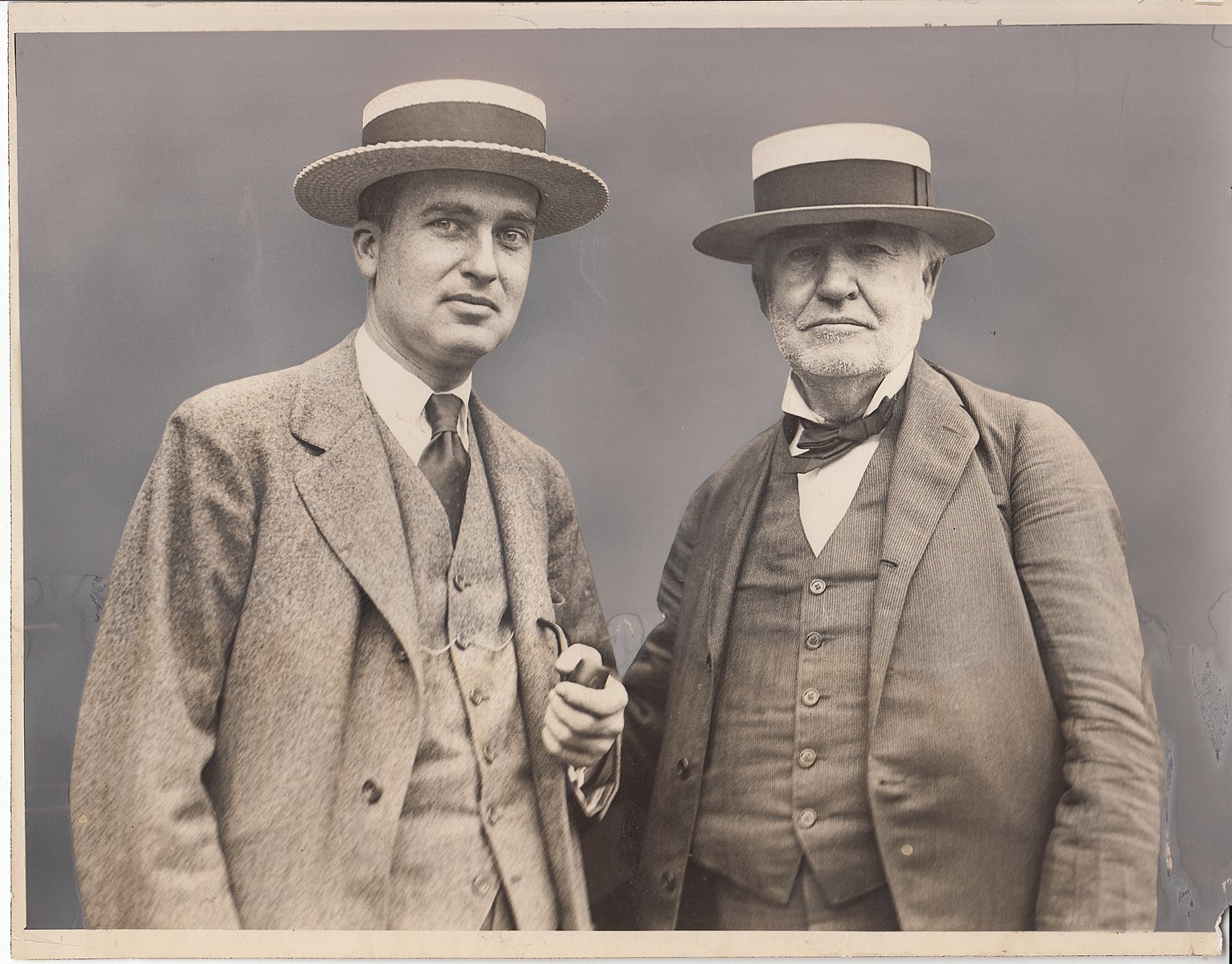
Pictured together at the close of an era of invention and innovation are Thomas Edison and his son, Charles Edison. In this moment, Charles stands beside an unshaven and contemplative Thomas, his steady gaze conveying both admiration and intent. More than a father and son, they represent the passing of a torch—one forged in laboratories and carried into the public sphere.
Charles would carve his own path through politics, art, and public leadership, eventually serving as Governor of New Jersey and Secretary of the Navy. Together, they embody a shift in American influence—from the inventive spirit of the industrial age to the strategic stewardship of a modern nation.
Thomas Edison trusted Charles deeply and groomed him to run the family’s industrial enterprises, but the financial transition between generations was more nuanced than dramatic. When Edison died in 1931, the bulk of his personal estate went to his wife, Mina Miller Edison—a common practice of the era—while Charles inherited business responsibilities, leadership authority, and selected assets, rather than the full fortune outright. The arrangement didn’t hinder Charles’s rise; instead, it ensured that his legacy would be built on his own administrative skill, political talent, and public service rather than on inherited wealth.
Photo taken on July 9, 1925
Image from U.S. National Park Service via Wikimedia Commons, public domain
