
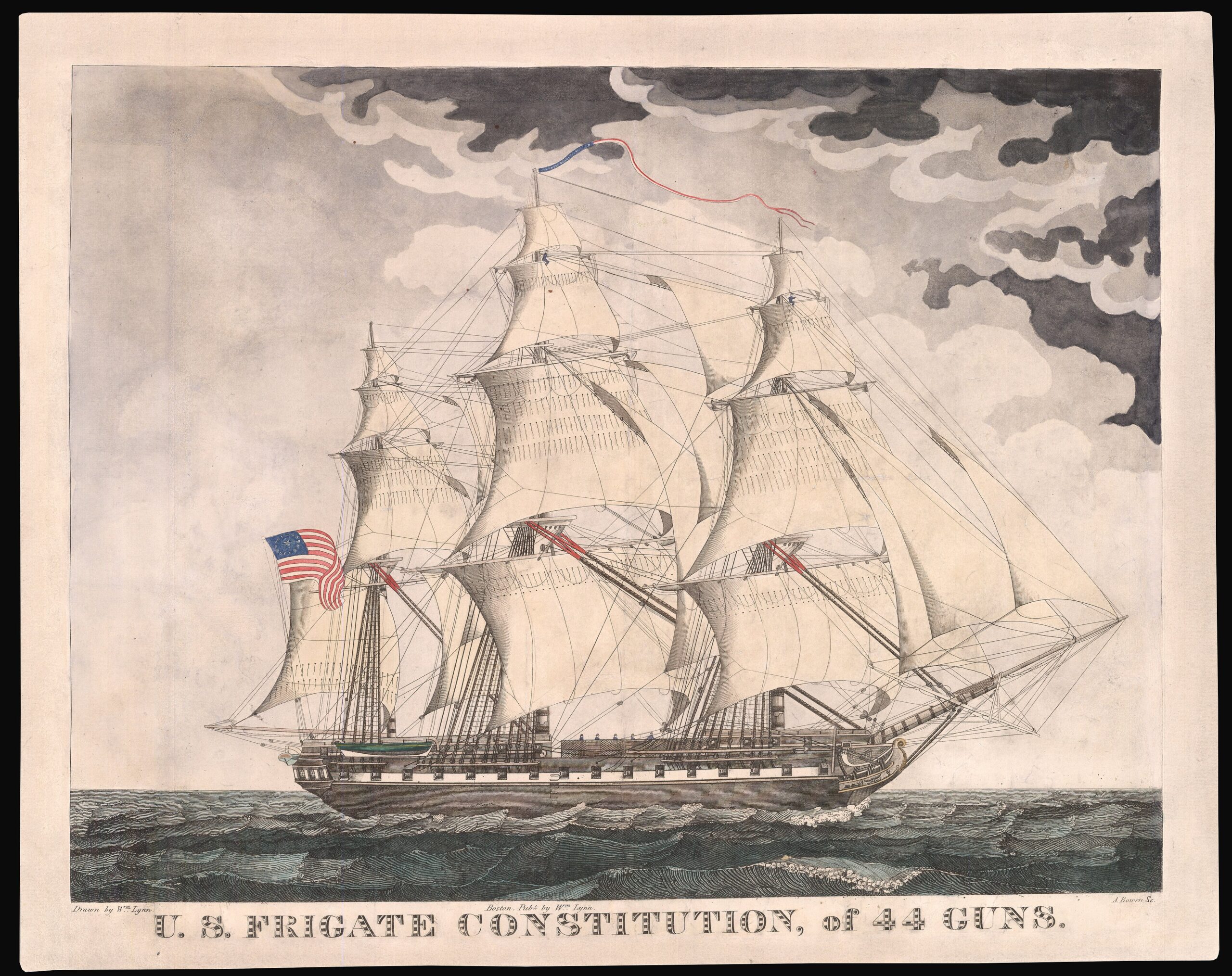
On July 5, 1812, the legendary American warship USS Constitution first sighted a powerful squadron of five British warships off the coast of New Jersey. With the War of 1812 freshly declared, Captain Isaac Hull immediately understood the danger: the British were attempting to intercept and capture his ship before it could join the American fleet. Although Constitution initially slipped out of view, the British squadron rediscovered her in mid‑July, setting off a tense pursuit along the Atlantic coast as both sides maneuvered for advantage.
On July 16, the wind suddenly died, leaving both fleets becalmed on a glass‑flat sea. Constitution drifted helplessly as the British closed the distance, bringing the American frigate within long‑range firing reach. Outgunned and unable to maneuver under sail, Hull faced the very real possibility that his ship — a symbol of the young United States Navy — might be overtaken in the opening weeks of the war.
What followed was one of the most remarkable feats of seamanship in American naval history. To escape, Hull ordered his crew to employ a grueling, little‑used tactic known as kedging. Sailors rowed small boats ahead of the ship, dropped heavy anchors into the seabed, and then used the capstan to manually haul the massive frigate forward. The British attempted the same maneuver, turning the chase into a slow‑motion endurance contest across a windless Atlantic. For 57 hours, under a scorching July sun, Constitution’s crew worked without rest — kedging, towing, and seizing every faint breath of wind — until they finally pulled Old Ironsides out of danger and left the British squadron far behind.
The July 5 first sighting and the mid‑July chase that followed became a defining early test of American naval resilience. The escape preserved a vital warship that would soon deliver morale‑boosting victories against British frigates later in the War of 1812. Today, the episode remains a foundational study in maritime resourcefulness, illustrating the endurance, discipline, and ingenuity that characterized early American sailors under extraordinary pressure.
Image via Wikimedia Commons, public domain
