
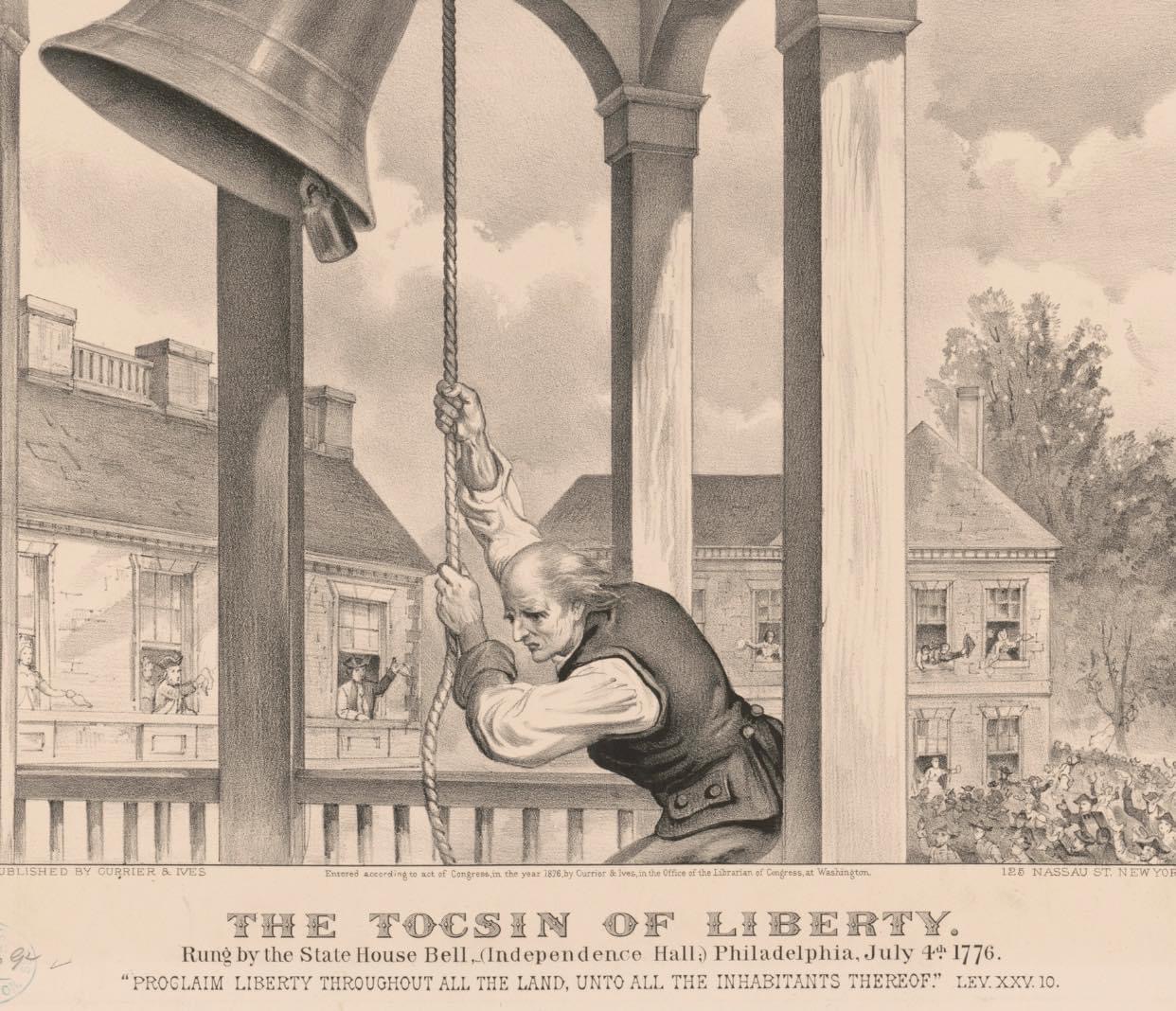
The romantic image of a lone bell‑ringer perched in the steeple on July 4, waiting for a secret signal to rouse the city, was a creation of George Lippard — a 19th‑century novelist who specialized in patriotic melodrama. His tale became wildly popular, cementing the idea that the bell rang out at the exact moment independence was declared.
In truth, the bell remained silent on July 4. The historic peal came four days later, on July 8, 1776, when the State House bell’s bronze voice summoned Philadelphians to the first public broadside reading of the Declaration of Independence. That ringing — not the imagined July 4 toll — marked the moment when the words of independence left the chamber and entered the streets, transforming parchment into public proclamation.
The mythic July 4 bell‑ringing speaks to America’s love of dramatic origin stories. But the real July 8 peal carries a deeper power: it was the sound of a new nation introducing itself to its people.
The Tocsin of Liberty — the State House bell (later known as the Liberty Bell), Philadelphia. Via Wikimedia Commons, public domain.
