
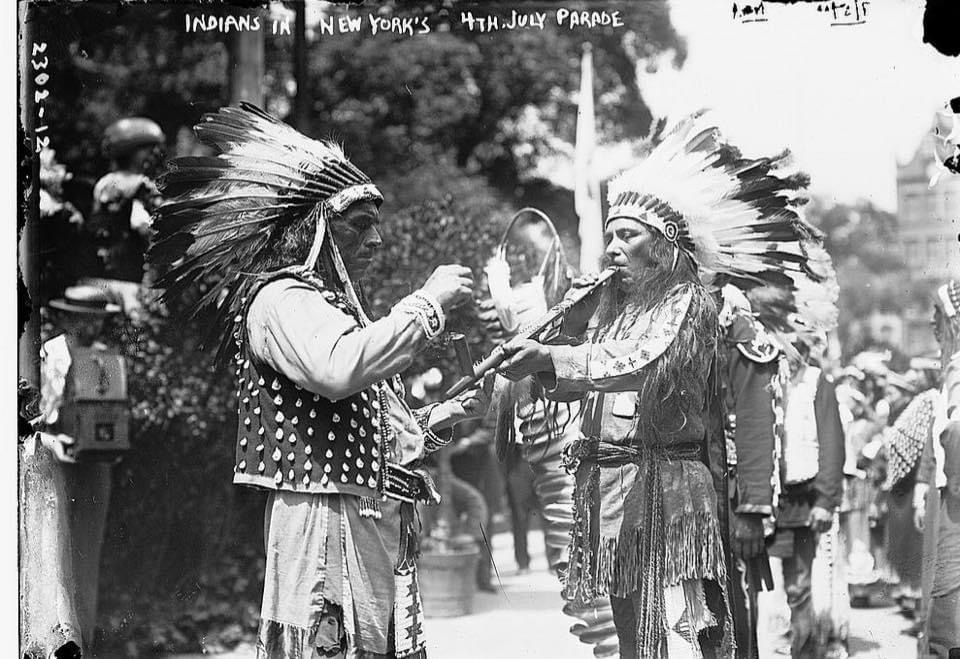
On a bustling New York street in the early twentieth century, an unexpected group participated in the parade for the nation’s birthday. Their presence came during a period when Indigenous communities were increasingly using patriotic celebrations to publicly assert their dual identities — both as citizens of sovereign Native nations and as participants in the broader American civic sphere. This moment also predates the Indian Citizenship Act of 1924, meaning many Native marchers were not yet legally recognized as U.S. citizens.
Many Indigenous participants in these early urban parades were performers from traveling Wild West shows or students from federal boarding schools. Both groups strategically used the visibility of Independence Day to showcase traditional regalia, cultural continuity, and enduring sovereignty — often in direct contrast to federal assimilation policies that sought to suppress those very expressions.
By marching down New York’s streets on the Fourth of July, they reminded spectators that their connection to the land long predated the republic itself. In doing so, they transformed a celebration of American independence into a vivid, assertive display of Indigenous survival.
Native Americans in Fourth of July Parade — New York — early 1910s. Via Library of Congress, no known restrictions.
