
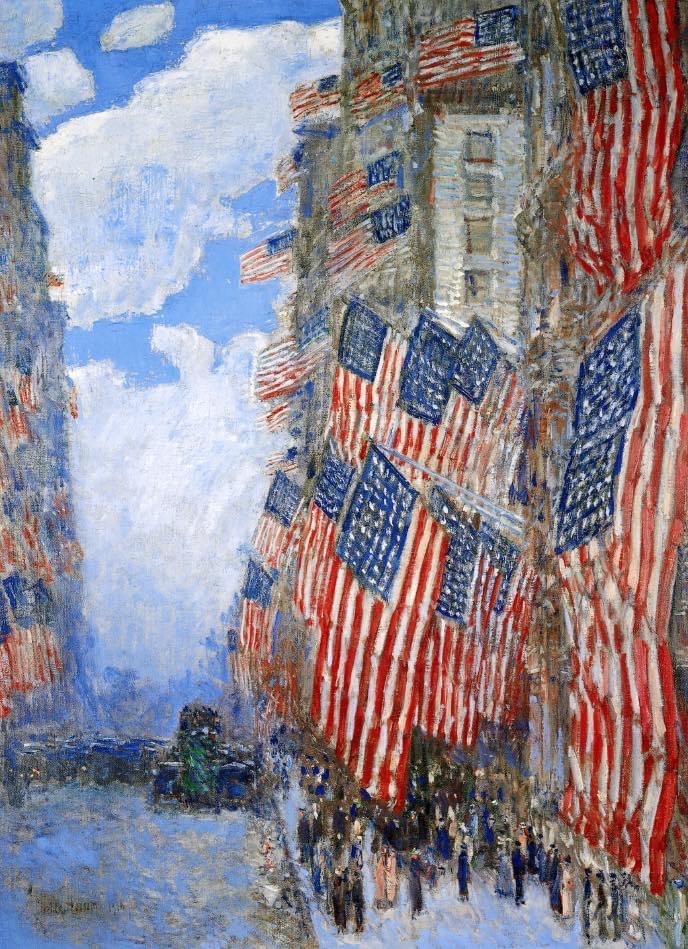
“The Fourth of July, 1916,” painted by American impressionist Childe Hassam (via Wikimedia Commons, public domain).
Hassam created this canvas during New York’s Preparedness Day parades, when Fifth Avenue was transformed into a corridor of flags urging the nation to ready itself for war. The dense, saturated field of red, white, and blue wasn’t a nostalgic celebration of past glory — it was a visual manifesto of a tense, rising movement trying to push a hesitant America toward entering World War I.
Hassam painted more than thirty works in his famous Flag Series, capturing the city’s anxious patriotism as the nation debated whether to abandon neutrality. His fluttering banners, fractured brushstrokes, and shimmering light weren’t just artistic choices — they mirrored the fractured political mood of 1916, when Americans were torn between isolationism and intervention. In Hassam’s hands, Fifth Avenue becomes both a celebration and a warning, a street draped in color but shadowed by the coming storm.
