
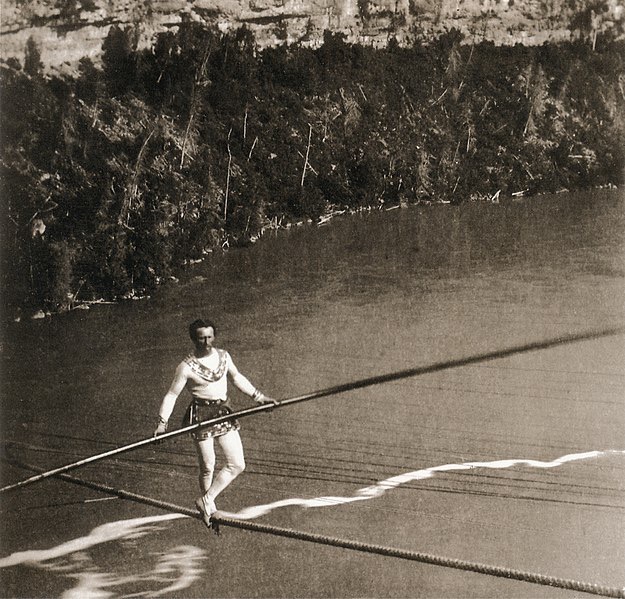
An international crowd of thousands gathered along the rocky cliffs of the Niagara River Gorge on June 30, 1859, watching in absolute awe as French acrobat Charles Blondin attempted the unthinkable. Balancing a heavy ash pole, Blondin stepped onto a fragile, 1,100-foot-long rope stretched across the churning river near the current site of the Rainbow Bridge. For several tense minutes, the audience held its collective breath as the daredevil slowly navigated the swaying wire, defying death hundreds of feet above the roaring rapids to complete the first successful tightrope crossing of the Niagara Gorge.
The true human fascination of Blondin’s historic feat lay in how his initial success transformed the terrifying gorge into a theater of sheer showmanship over the coming weeks. Refusing to rest on his laurels, Blondin repeated the treacherous crossing multiple times, deliberately escalating the danger by performing blindfolded, trundling a heavy wooden wheelbarrow, and even carrying his terrified manager piggyback across the abyss. His daring exploits captured the imagination of a fast-growing, nineteenth-century public that possessed an insatiable appetite for spectacles and grand engineering marvels, transforming a natural obstacle into an enduring symbol of human courage, balance, and unyielding will.
Image: Charles Blondin on the tightrope over Niagara Gorge by William England via Wikimedia Commons, public domain.
Image: Susan Hayward publicity portrait via Alamy.
