
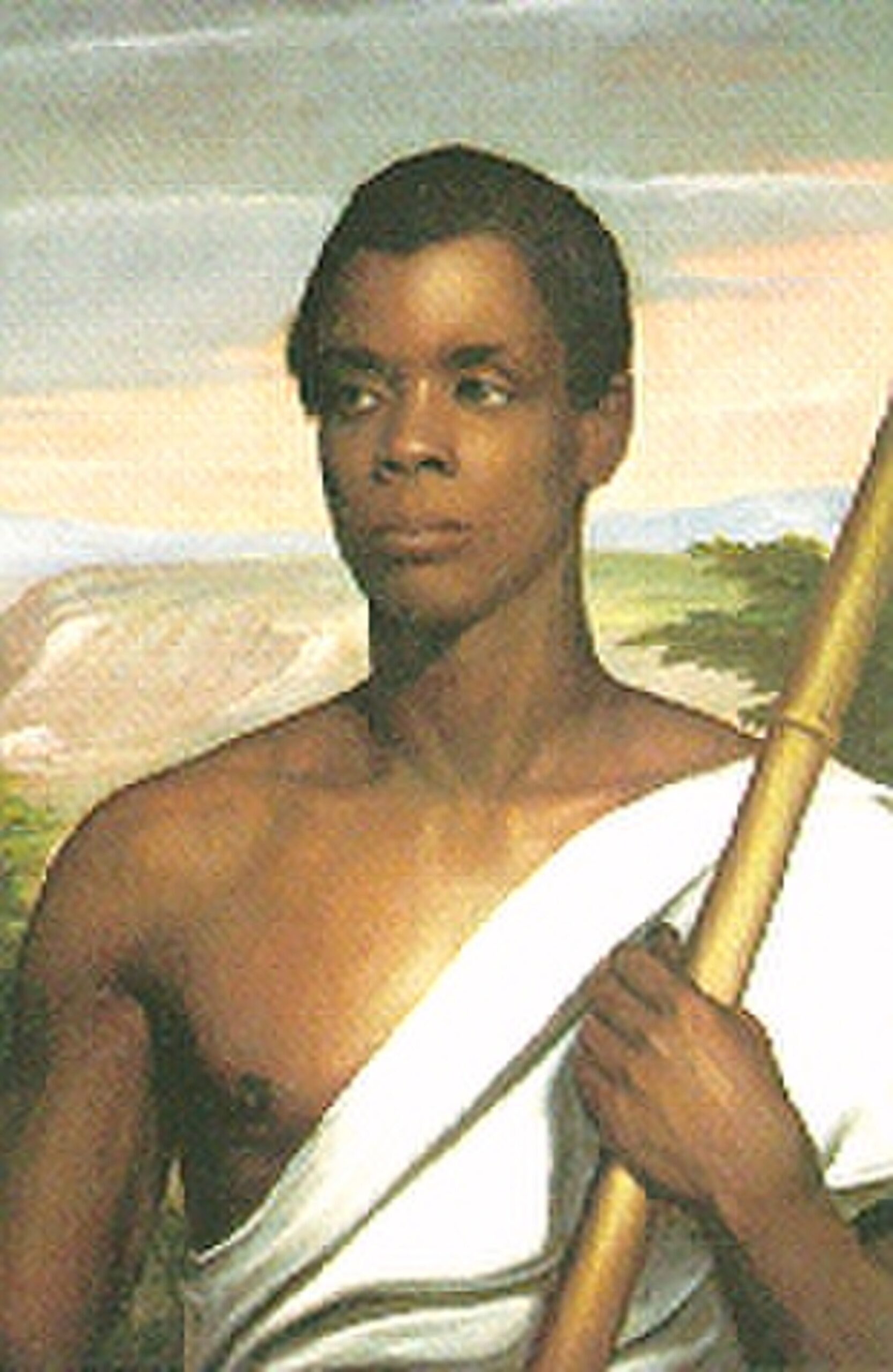
A monumental struggle for human liberty was brewing on June 29, 1839, a day after clearing port from Havana, Cuba, as the coastal schooner La Amistad navigated the Caribbean waters, carrying fifty‑three illegally enslaved Mende Africans toward a lifetime of plantation labor. Packed into the suffocating hold, a resilient young man named Sengbe Pieh, later known to history as Joseph Cinqué (shown), refused to accept the chains forced upon him. It was during these grueling first hours at sea on this late-June voyage that Cinqué discovered a loose nail in the ship’s hull, using it to unlock his iron collar and secretly free his fellow captives as they prepared for the desperate revolt that would erupt on the night of July 2nd.
The human heartbeat of the Amistad uprising extends far beyond the violence at sea into the foundation of American civil rights. After seizing control of the vessel, the Africans spared the lives of two Spanish navigators, ordering them to steer toward Africa; instead, the navigators secretly turned north, leading to the ship’s interception off Long Island, New York. The legal battle that followed reached the United States Supreme Court, where former President John Quincy Adams delivered a powerful defense of their universal right to resist unlawful bondage. The events unfolding beneath the deck on this summer day triggered a legal earthquake that challenged the institution of American slavery and affirmed the eternal human right to fight for freedom.
