
President Dwight D. Eisenhower signed the historic Federal-Aid Highway Act into law on June 29, 1956, launching the largest public works project in American history. Eisenhower’s intense dedication to building a comprehensive interstate system was forged decades earlier during a grueling 1919 Army convoy that took two months to cross the nation’s muddy roads, and was later reinforced by his awe of Germany’s high-speed autobahn during World War II. With a single stroke of his pen, he authorized the construction of over 40,000 miles of expressways, permanently altering the economic and physical landscape of the United States.
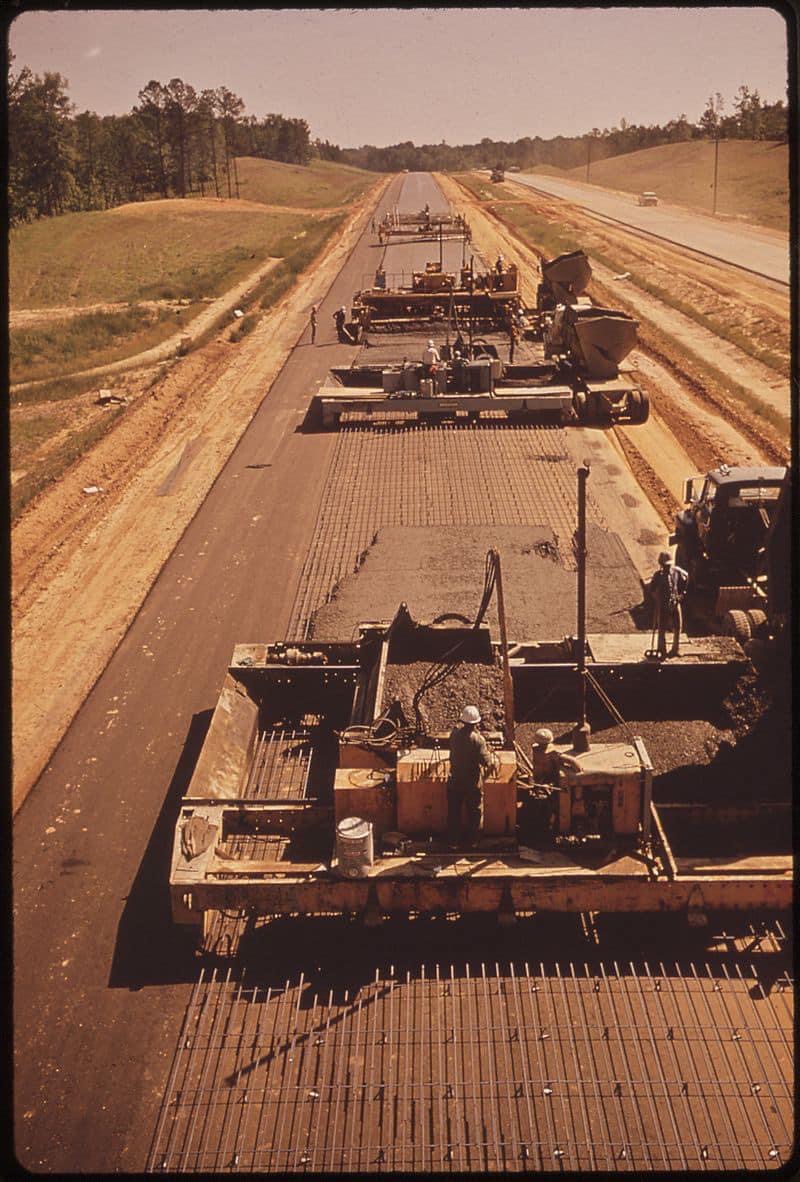
The staggering industrial scale of the highway system soon triggered a revolutionary wave of resource recycling across the country. Decades into the project, engineers began utilizing steel reinforcement rods manufactured from thousands of shredded, obsolete automobiles to strengthen new stretches of asphalt like Interstate 55 in Mississippi. This ingenious process meant that the very vehicles using the highways were literally built into the foundation of the roads beneath them. The legislative signature recorded on this date did more than just lay concrete; it connected isolated communities, created the modern American suburbs, and transformed the way a mobile nation lived, worked, and traveled.
Image: Interstate 55 road construction steel reinforcement work in Mississippi via Wikimedia Commons, public domain.
