
British Parliament lit a slow‑burning fuse that would ultimately ignite the American Revolution when it enacted the Townshend Revenue Act on June 29, 1767. The act imposed duties on everyday colonial imports — glass, lead, paint, paper, and tea — to fund imperial administration in America. Passed alongside the Commissioners of Customs Act, it created a powerful Boston‑based customs board with sweeping authority to investigate and prosecute colonial merchants. For colonists, the true crisis was not the monetary burden but the constitutional violation: taxation without representation, imposed by a legislature an ocean away.
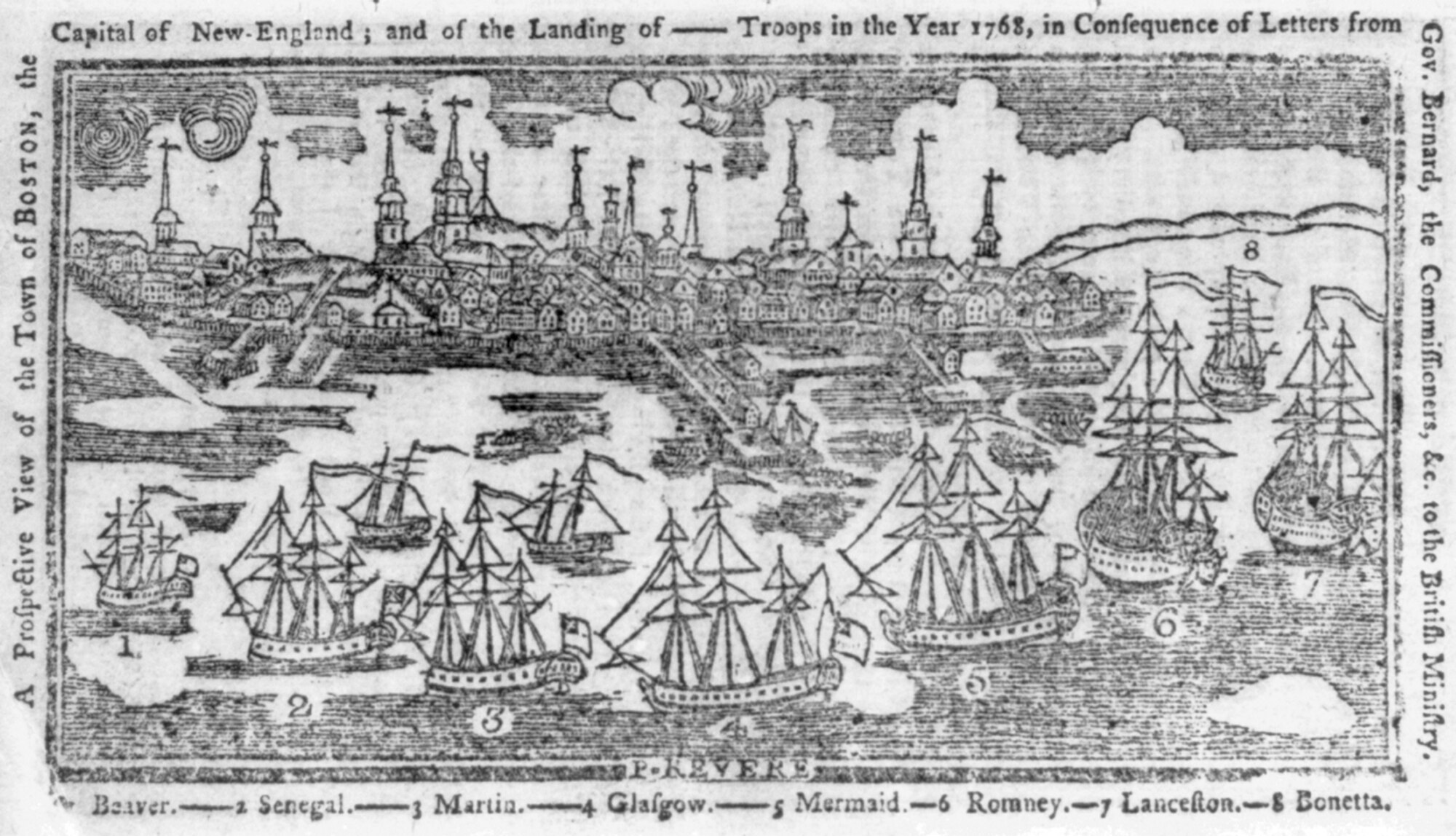
The human consequences of this coercive policy erupted in Boston over the next three years. When customs officials seized John Hancock’s sloop Liberty on suspicion of smuggling, enraged crowds rioted, forcing the commissioners to flee the city for their safety. London responded by deploying regiments to occupy Boston, turning its streets into a tense military zone. That occupation directly set the stage for the bloodshed on King Street in March 1770 — the Boston Massacre — proving that the ink Parliament dried in 1767 had already sealed the fate of an empire.
Image: View of the town of Boston, the capital of New‑England and the landing of troops in the year 1768 by Paul Revere via Wikimedia Commons, public domain.
