
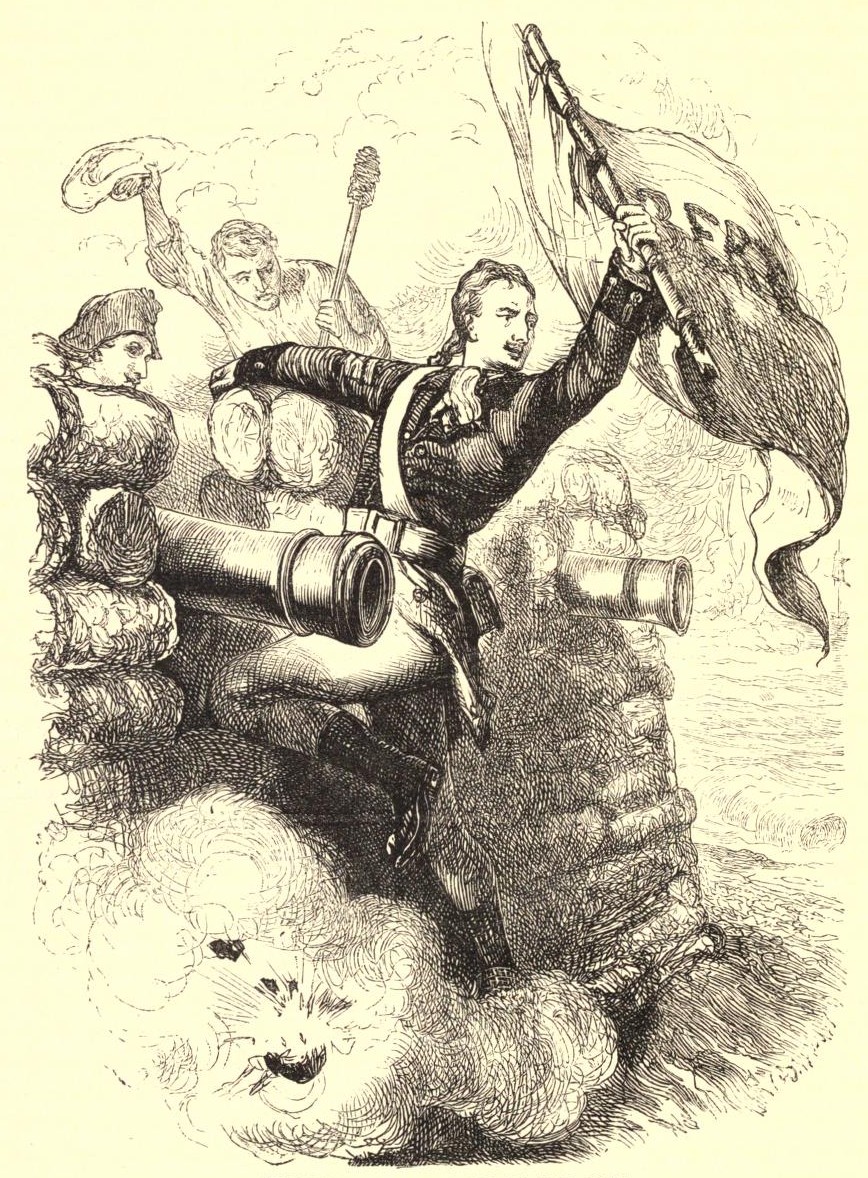
Six days before the adoption of the Declaration of Independence, on June 28, 1776, a massive British fleet threatened to crush the American rebellion at Charleston, South Carolina. Commodore Sir Peter Parker steered nine heavily armed warships toward Sullivan’s Island, intending to dismantle an unfinished American fort commanded by Colonel William Moultrie. For nearly ten hours, the British ships unleashed a catastrophic bombardment. However, the fort had been hastily constructed from the spongy wood of local palmetto trees, which miraculously absorbed the heavy iron cannonballs rather than splintering apart, allowing the small garrison to repulse the attack and hand the Royal Navy a humiliating defeat.
The human spirit of this battle was immortalized by Sergeant William Jasper. When the South Carolina flag was shot down and fell outside the fort’s walls into the active line of fire, Jasper leaped over the ramparts without hesitation, recovered the banner, and safely secured it back in place under intense enemy shelling. This astounding victory saved the American South from invasion for several years and provided an immense psychological boost to the Continental Congress in Philadelphia. It also inspired South Carolina to adopt the palmetto tree as its permanent state symbol, transforming a humble native tree into an enduring icon of American resilience.
