
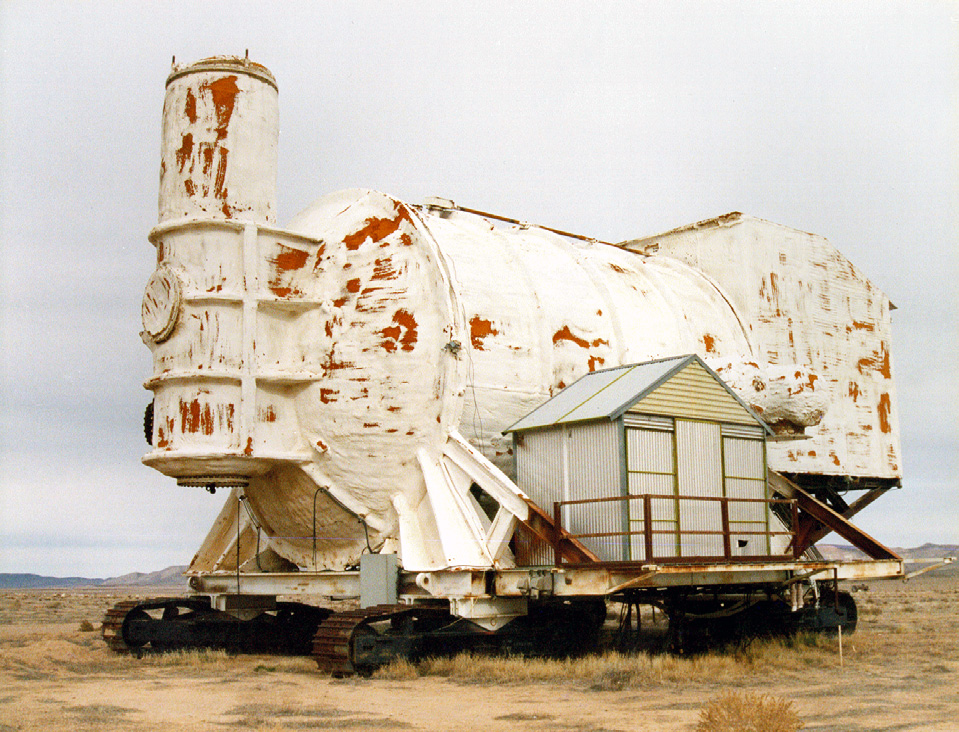
On June 24, 1980, the Defense Nuclear Agency executed the Huron King underground nuclear test at the Nevada Test Site, a highly sophisticated experiment that cost approximately $11.6 million. Scientists placed an actual military communications satellite inside a massive, specialized mobile vacuum chamber positioned directly on the surface above an underground test shaft. When the nuclear device detonated deep below, the resulting radiation was funneled up a vertical pipe directly into the chamber, striking the satellite components before the test assembly could be crushed by the collapsing earth.
This extreme experiment represented a critical, high‑stakes race to safeguard America’s orbital infrastructure from the hidden dangers of space warfare. Rather than testing a new offensive weapon, Huron King was designed to evaluate the devastating effects of an electromagnetic pulse (EMP) on satellite electronics in a simulated
