
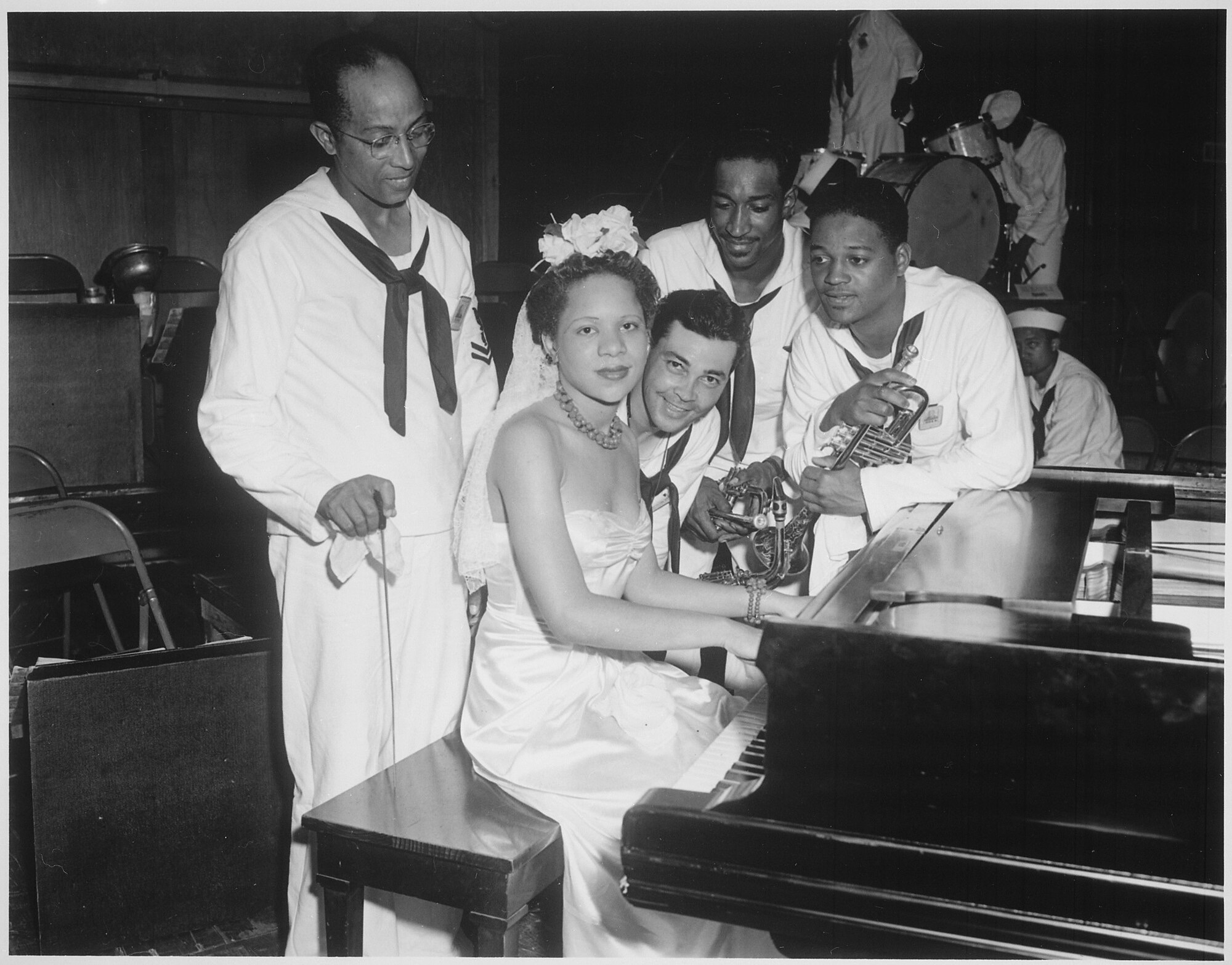
On June 16, 1943, the Great Lakes Naval Training Station outside Chicago hosted a spirited wartime musical performance by the brilliant jazz pianist Dorothy Donegan, whose electrifying technique and fearless improvisational style captivated thousands of young sailors preparing for deployment. Donegan, a Chicago native and classically trained virtuoso, blended boogie-woogie, stride piano, and modern jazz into a dazzling, high-energy show that lifted morale during one of the most intense periods of World War II naval mobilization. Her appearance at Great Lakes reflected the Navy’s growing recognition of the essential role that music and entertainment played in sustaining the emotional resilience of its rapidly expanding wartime force.
Donegan’s performance also marked a significant moment in the broader cultural history of the home front, as African American musicians were increasingly invited to perform for integrated military audiences despite the persistence of segregationist policies elsewhere in the armed forces. Her fearless showmanship and technical brilliance earned her comparisons to Art Tatum, one of the greatest pianists of the era, and helped pave the way for future generations of Black female performers. The Great Lakes concert stands as a vivid reminder of how music served as both a unifying force and a powerful expression of American creativity during the darkest days of global conflict.
