
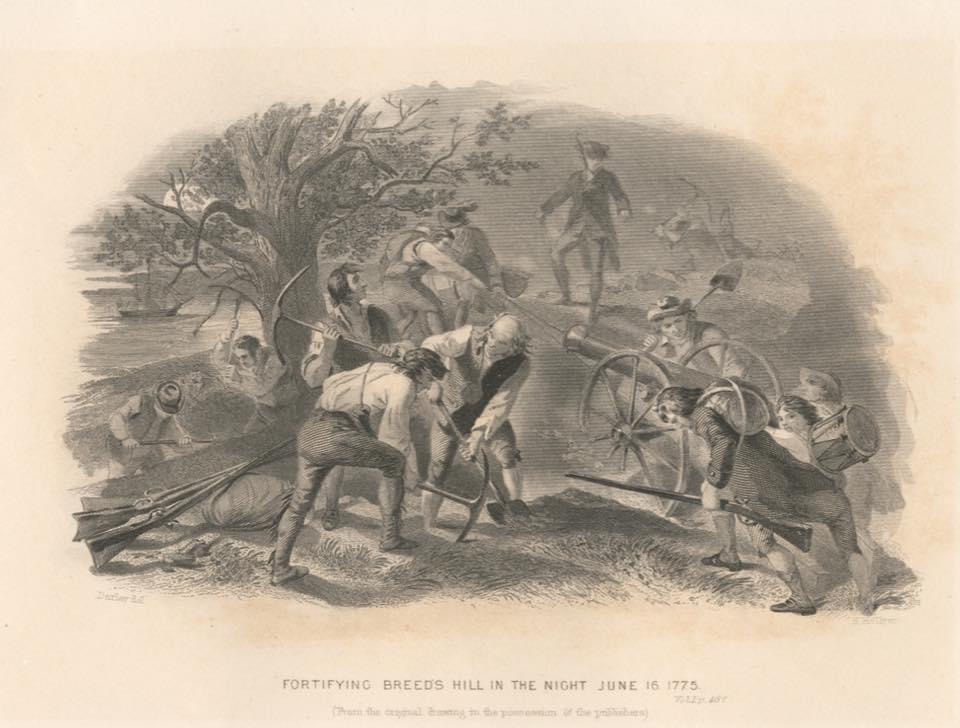
On June 16, 1775, under the absolute cover of total darkness, over one thousand colonial militia soldiers marched silently toward the high ground overlooking Boston Harbor to construct a massive dirt fortress on Breed’s Hill. Initially ordered by the Committee of Safety to fortify the more prominent Bunker Hill, colonial commanders Colonel William Prescott and General Israel Putnam made the daring field adjustment to move their lines forward to the smaller, lower hill instead. Working feverishly with shovels and pickaxes for hours without lanterns to avoid alerting nearby British warships, the exhausted farmers successfully erected a six-foot-high earthen redoubt before the first rays of dawn broke across the bay.
The sudden appearance of the imposing American fortification completely stunned the British military command, who awoke to find their entire fleet and garrison in Boston directly exposed to rebel artillery fire. The British immediately launched an aggressive naval bombardment, followed by a series of bloody, frontal infantry assaults that escalated into the historic Battle of Bunker Hill later that afternoon. Though the Americans were eventually forced to retreat after running completely out of gunpowder, their disciplined stand on the night of June 16 proved that raw colonial volunteers could hold their ground against the elite regulars of the British Empire, transforming the skirmish into a powerful catalyst for national rebellion.
